Tag: health

  • Deer Bone Broth

    Deer Bone Broth

    Bone broth is one of the most nutrient-dense foods you can preserve for your pantry shelves. When made with venison bones, it brings a deep flavor and is full of collagen, minerals, and marrow. Pressure canning makes it shelf-stable and ready to use anytime for soups, gravies, or sipping on its own.
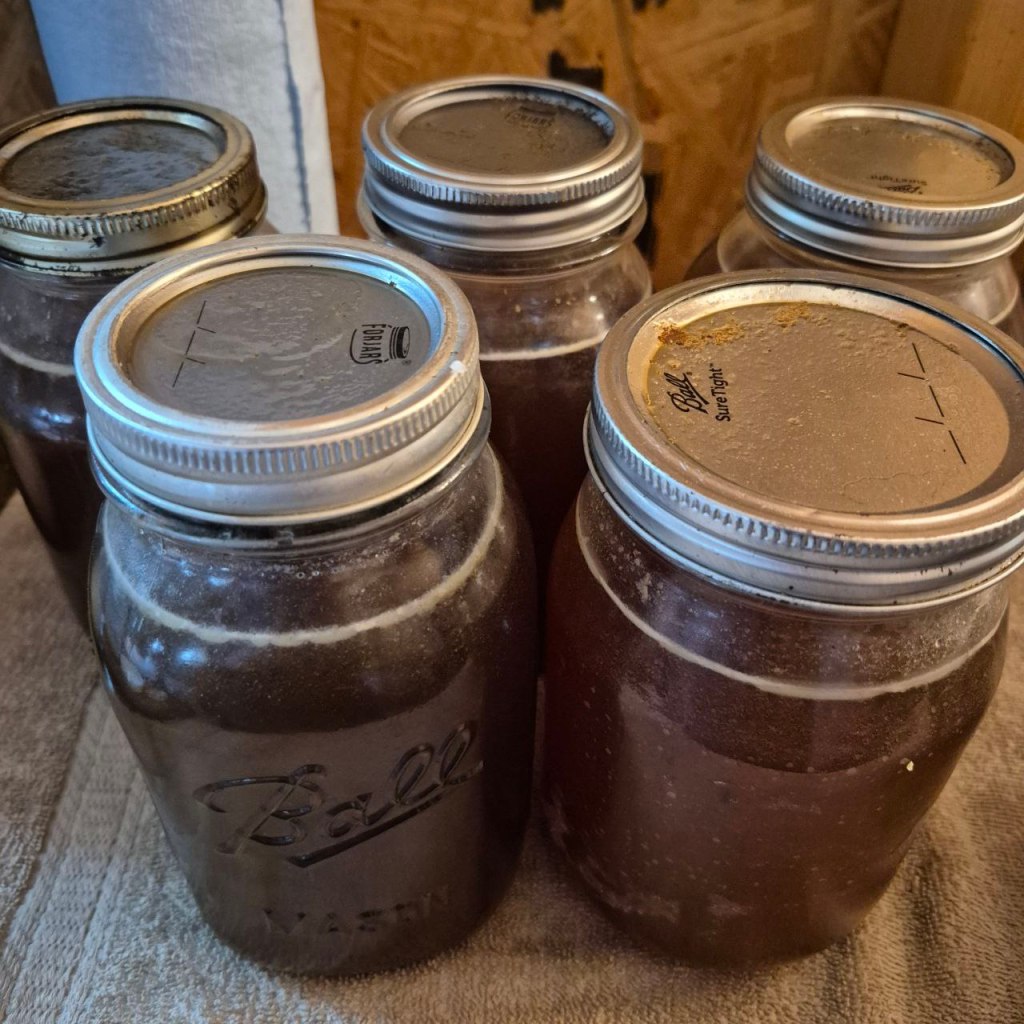
    5 quart jars of home-canned deer bone broth sitting on a towel on a counter

    This is not a recipe that has to be followed exactly, but simply what we did this time. Last time was different and next time will probably be different again. We ended up with enough broth to can 7 quarts, but obviously that depends on the amount of bones you start with and how strong you want it.

    Ingredients

    • Deer bones, cut into smaller pieces (helps release marrow and collagen)
    • Water (enough to cover bones in stockpot, refill as needed)
    • 1–2 garlic cloves
    • 1 onion, quartered
    • A handful of carrot tops
    • A handful of radish tops
    • Fresh rosemary sprigs
    • Salt, to taste
    • A splash of vinegar (helps pull nutrients and minerals from the bones)

    Instructions

    Step 1: Prepare the Broth

    1. Place cut deer bones in a large stockpot.
    2. Add garlic, onion, carrot, radish tops, rosemary, salt, and vinegar.
    3. Cover with water.
    4. Bring to a boil, then reduce to a simmer. Let it cook long enough for the bones to release nutrients and flavor (at least 24 hours is ideal).

    Step 2: Strain and Fill Jars

    1. Strain broth through a fine strainer or cheesecloth to remove solids.
    2. Ladle hot broth into clean, hot quart jars, leaving 1 inch headspace.

    Step 3: Pressure Can

    1. Wipe rims, apply lids and bands.
    2. Place jars in pressure canner with 2–3 inches of simmering water. A splash of vinegar in the canner keeps hard water stains from forming.
    3. Process at 10 pounds pressure (adjust for altitude if needed):
      • Quarts: 25 minutes
      • If you don’t have enough jars of broth to fill the canner, put some jars of water in to keep everything from rattling around.

    Step 4: Cool and Store

    1. Allow canner to depressurize naturally.
    2. Remove jars and let them cool 24 hours without touching.
    3. Check seals before storing. Keep in a cool, dark place.

    Using Your Deer Bone Broth

    This broth is versatile—use it as a base for venison stew, wild rice soup, or simply heat it with a little extra seasoning, if needed, and sip it warm.

    Homestead Hilarity

    Micah, age 9 — A self proclaimed “hilly-billy”.
  • Homemade Laundry Detergent

    For Pennies A Load!

    Like maybe some of you, I used to enjoy meandering down the candle aisle in Walmart and smelling every one that sounded interesting. And I’d check every single bottle of soap or shampoo to make sure I bought the one I liked the best.

    Now, I find myself preferring, by far, natural scents over commercial ones. In fact, just one sniff of one candle or bottle of soap is often enough to bring on a headache.

    Add to that kids who break out from harsh chemicals in most laundry detergents, and we aren’t the easiest people to buy laundry soap for.

    So, the other day, I thought, why buy it?

    I started checking and soon found a recipe for laundry detergent powder with only 4 clean natural ingredients, one of them being fragrance of my choice. It sounded great to me and we even had most of the ingredients on hand.

    • Borax for odor control, stain removal, and general whitening. I used 20 Mule Team brand.
    • Fels-Naptha for cleaning and stain removal. I used Purex brand
    • Washing Soda for more cleaning power and odor control. I used Arm and Hammer brand.
    • Essential Oils for a great natural smell. I used one of Plant Therapy laundry blends.

    I didn’t have Borax or Washing soda, but a quick trip to our little local store provided Borax and we found a way to make our own Washing soda.

    It turns out, if you put regular baking soda on a cookie sheet in the oven at 400 degrees for an hour, you have Washing Soda!

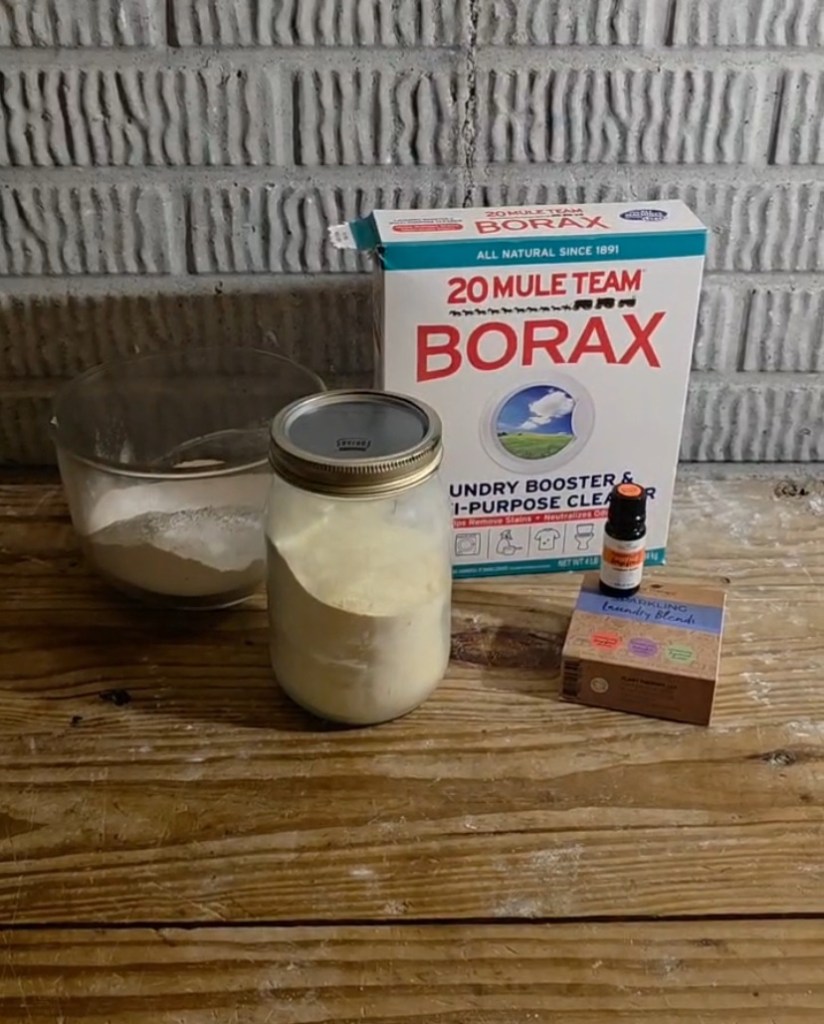
    A box of Borax, a bar of Fels-Naptha, a box of essential oils, a bowl of washing soda, and a jar of laundry detergent powder.

    Homemade Laundry Detergent


    1 cup Borax Powder

    1 cup Washing Soda

    1 cup Fels-Naptha, grated (about 1 bar)

    15-20 drops of essential oil, your choice

    If you have Washing Soda, put it and the Borax in a jar or container. You will want to use a mask or something to cover your face to keep you from breathing in the fine powders. If you don’t have Washing Soda, you can make your own by putting a cup of baking soda on a cookie sheet in a 400 degree oven for an hour. This changes the chemical formula and makes Washing Soda.

    Take the bar of Fels-Naptha and grate it. You can use the fine side of a cheese grater or your food processor shredder disc on the small side. Again, the powder is very fine and not something you want to breathe so wear something over your mouth and nose. Let it settle before you open the food processor.

    Put all three dry ingredients in a container or jar. I used a jar so I could just put a lid on and shake it to mix it.

    Let the mixture settle and then open and add 15-20 drops of essential oils for scent.

    Shake to mix in the oils and let sit overnight.

    Use 2 tablespoons for a regular load and 3 tablespoons for a heavy load.

    I also have a video showing the process on YouTube at Bringing Life Homestead.

  • The Delights of Echinacea

    The Delights of Echinacea

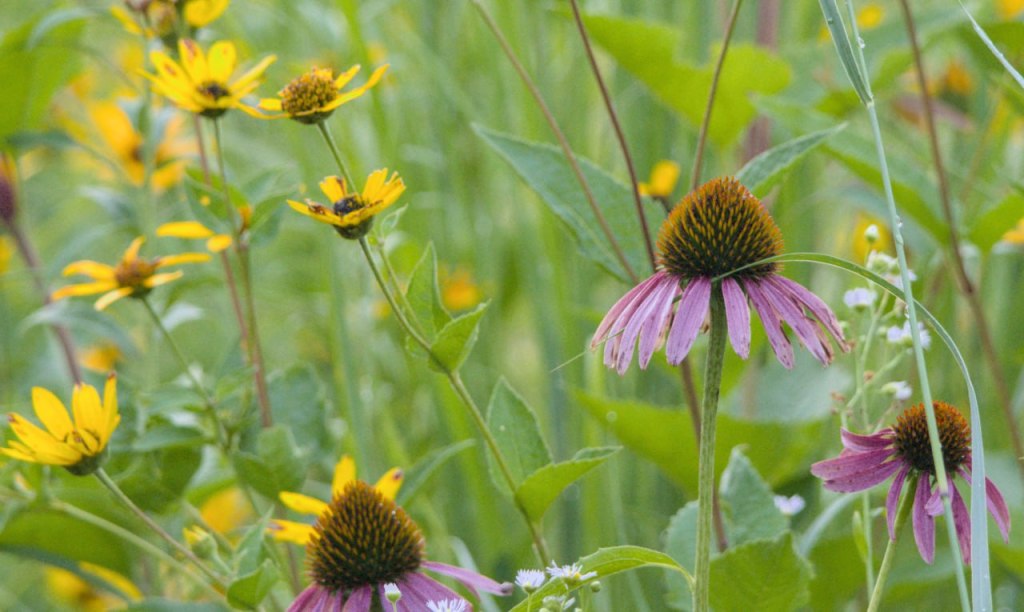
    purple coneflowers or echinacea growing next to bright yellow flowers

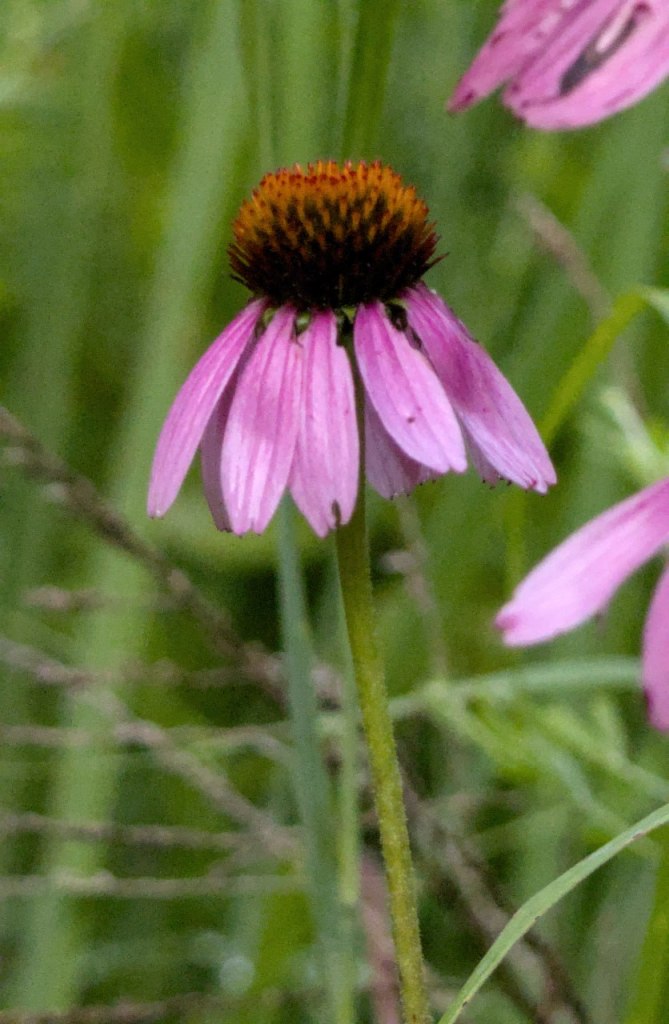
    You’ve probably seen echinacea purpurea before—even if you didn’t realize it. With its drooping purple petals and bristly orange center, it looks like a daisy that tried hairspray. But don’t let the frilly look fool you—this plant has earned its place in herbal medicine cabinets for centuries. And like a lot of herbs, the more I learn about it, the more I find myself marveling at how God packed so much usefulness into a wildflower.

    I’ve been looking into echinacea more lately—what it does, how it works, and why people use it—and I thought I’d share some of what I found in case you’re curious too.

    What Is Echinacea Purpurea?


    Echinacea is a native North American plant, often called “purple coneflower.” The purpurea species is the one most commonly used for medicinal purposes, though there are a few other types as well. It’s been used traditionally by Indigenous peoples and adopted into folk remedies for everything from infections to snake bites.

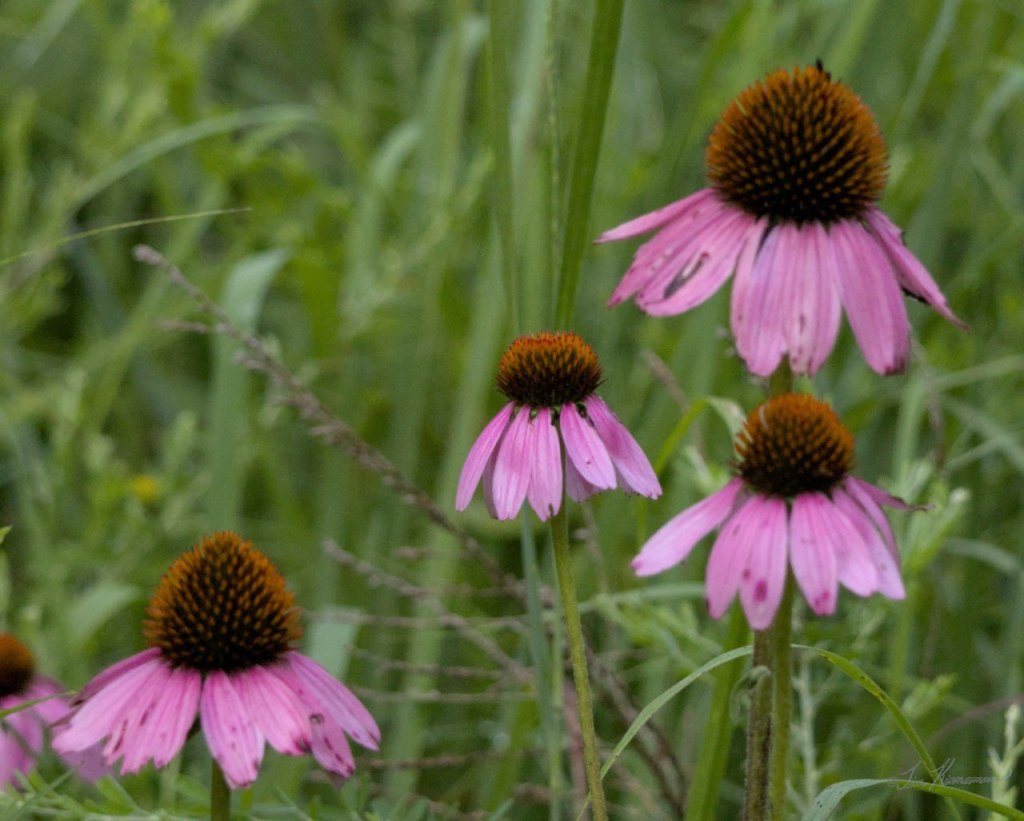
    echinacea flowers, also known as purple coneflowers, growing in a field

    What Is It Used For?


    The most common reason people reach for echinacea is to support the immune system—especially when cold or flu season hits. But its uses go way further than that. Here’s a quick list of what echinacea is said to help with:

    • Immune support: May shorten the duration and lessen the severity of colds.
    • Anti-inflammatory: Can reduce swelling and irritation, helpful for sore throats or skin issues.
    • Wound healing: Used in salves or teas for cuts, burns, or skin infections.
    • Antibacterial/antiviral: Traditionally used for bacterial infections and to support the body during illness. It works better in larger doses, maybe 3x what you would normally use of dried herbs.
    • Venomous Bites: Stops the venom from snake or spider bites and helps the body heal.
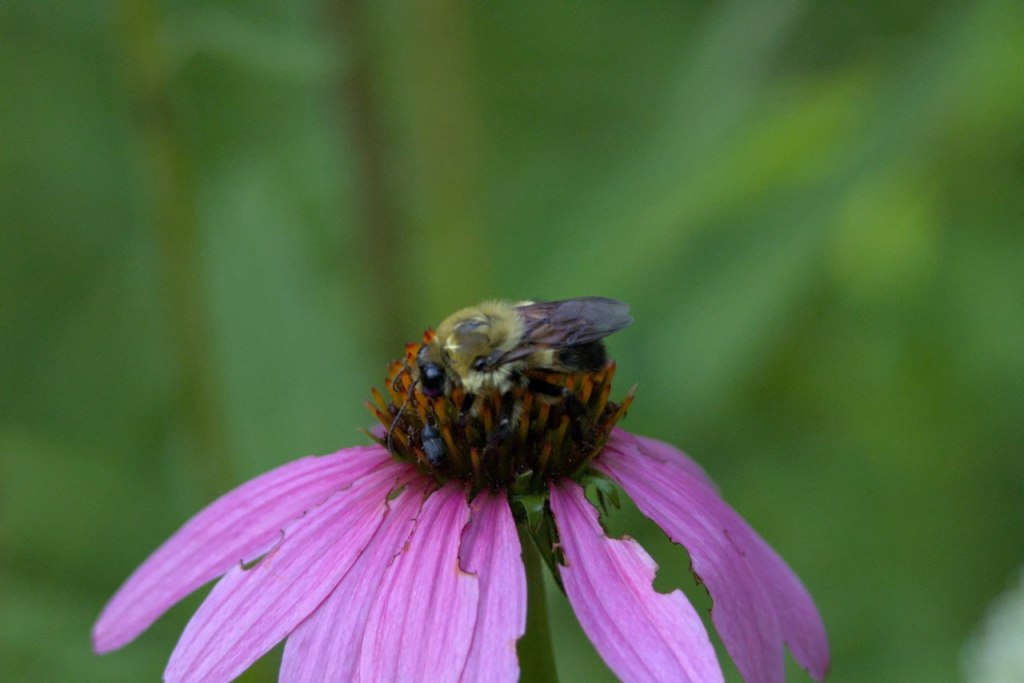
    a bee sleeping on top an echinacea flower

    How Is It Taken?


    Echinacea is often taken as a tea, tincture, or capsule. Some folks also use it topically (like in a salve or poultice). Most herbalists recommend using it at the first sign of illness—not as a long-term supplement. That’s because it works best to ‘kick-start’ your immune system when it’s under attack. Long-term use might reduce its effectiveness and may even overstimulate your immune system if taken constantly Think of it like a herbal first responder: ready when needed, but not meant to be on duty 24/7.

    A Few Notes to Keep in Mind

    • Not recommended for people with autoimmune disorders unless you’ve done your research or talked to an herbalist. Echinacea stimulates the immune system which might not be something you want to do in this instance.
    • Some people may be allergic—especially if they’re sensitive to plants in the daisy family.
    • Pregnant or nursing? Best to double-check safety guidelines before using it. Though it is generally considered safe, doing your own research to see if something is right for you is always a good idea.
    a single purple coneflower head with drooping purple petals and a bristly brown and orange center

    Final Thoughts


    Echinacea isn’t magic. But it is a great example of how God designed plants with more than beauty in mind. I like knowing there are things growing in the world—and in some gardens—that can help strengthen the body instead of just masking symptoms. Even if I’m not using echinacea all the time, it’s one of those herbs I like having on hand. Kind of like that friend who shows up with chicken soup when you’re sick—only this one grows from seed and doesn’t need a nap afterward.

  • No Thyme For Bugs?

    No Thyme For Bugs?

    If there is one thing about warm weather that I dislike and makes me start itching for the cold, it’s mosquitoes. With a pond nearby, a stream on the property, and a wetland down the road, we can get more mosquitoes than you can shake a stick at. Or your hand.

    After our flood earlier this year, we had clouds of biting pests so thick that someone actually put their vehicle into the ditch trying to swat them out of their face.

    Needless to say, bug repellent became a top priority. No one enjoyed being a buffet for bugs while feeding the dog or working in the garden or checking the mail.

    So I did what I do. I started researching and experimenting. I found the essential oils that are supposed to repel mosquitoes and went to work. I diluted them with carrier oils and water and added some vanilla to emulsify them or help them all mix together. Then we sprayed it on and ventured into the fray. 

    A vicious fight ensued in which we came out the losers. Maybe even sore losers. We retreated indoors to apply lavender to our wounds and discuss strategies.

    Now, if there’s one thing I’m good at, it’s coming up with ideas. I don’t guarantee them all as good ideas, but they are ideas, nonetheless. So, a few days later, after the itching calmed down some, I tried again. 

    This time I took three of the essential oils most known for repelling mosquitoes, mixed them with non-scented lotion, and applied the concoction liberally. The kids and I noticed a definite difference. We could now boldly leave the house and work outside while the mosquitoes kept a respectful distance of 6 inches or so. This blissful triumph lasted about 15 minutes. Once the lotion was all absorbed, we were right back to square 1. 

    So far, it was Mosquitoes 2; Rachel 0.

    Then, to add insult to insect injury, Tim noticed a definite difference, too. Everywhere he used the anti-bug lotion, he had broken out in a rash. Apparently, he can’t handle essential oils on his skin unless they are extremely diluted. This brought the score to a lovely Mosquitoes 2; Rachel -1.

    That put an effective stop to my experiments with bug repellent for a while. And thankfully, the majority of the flying hordes moved off or disappeared, making life much more manageable. 

    But then, Tim started taking walks almost every morning and night. He’s been given permission to even do some off-road exploring in the wetland, which opened up a slew of new opportunities for him and his camera. This brought insect repellent right back to the forefront though, since he and sometimes the kids were tramping through brush and weeds. So something had to be done for the bugs. 

    I tiptoed back to my research, unsure if I could find anything that would help without causing side effects. Finally, I found a recipe that looked promising. It called for beef tallow as the main part of the base since that stays on the skin longer than lotion or water. It also didn’t rely on just essential oils for its potency.

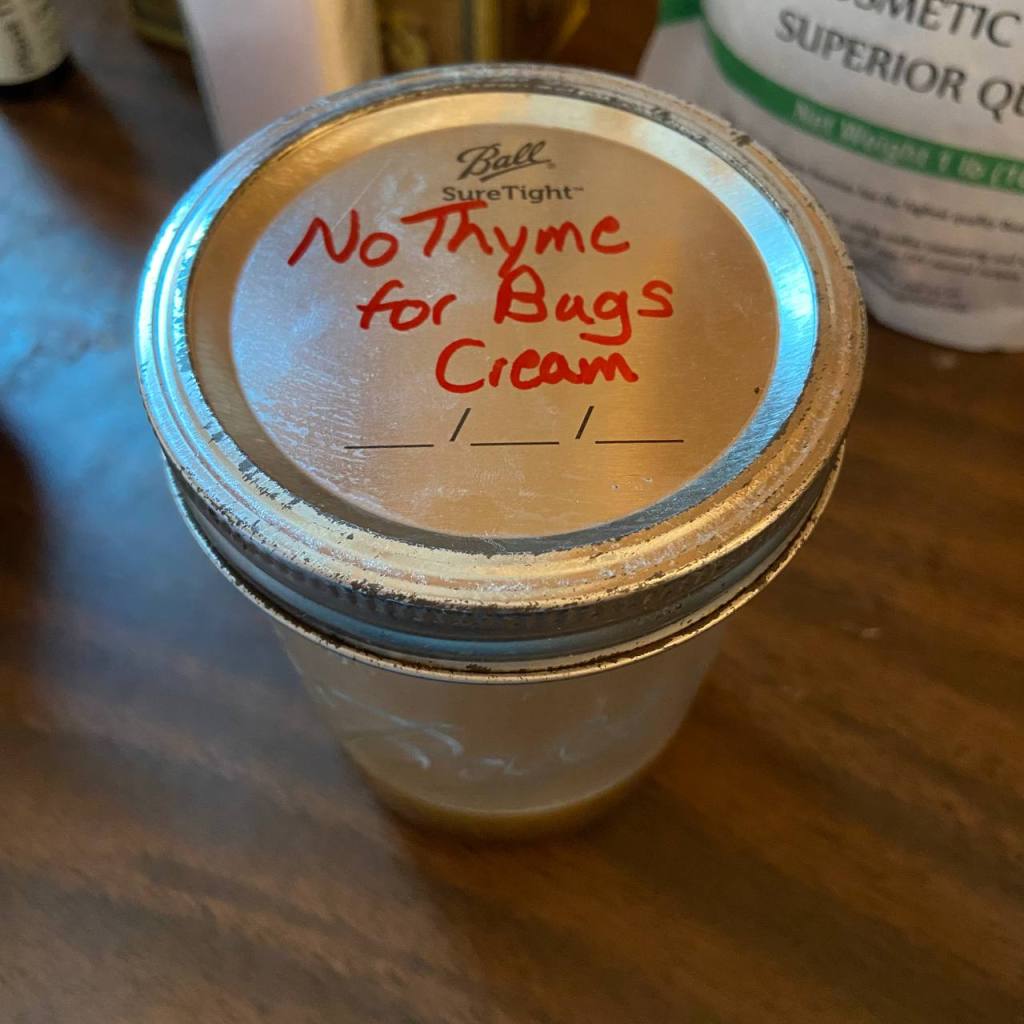
    No Thyme For Bugs Cream


    2 T Tallow

    1 t Beeswax

    1 T Vinegar (White or ACV)

    1 T Thyme Tea*

    10-15 Drops Lavender Essential Oil

    1/4 t Ground Clove

    Melt the tallow and beeswax in a double boiler or heat-safe bowl over simmering water. Once it is all melted, remove from heat and let cool 2-3 minutes.

    Stir in remaining ingredients and pour into a jar or sealable container. 

    Shelf life at room temperature should be 6-9 months.

    *To make the thyme tea, put 1 t of dried thyme in 1 c of boiling water, and let steep at least 5 minutes. The longer it steeps, the more potent the tea.


    Now, I know I said Tim cannot have essential oils on his skin, but that does not apply to lavender, which is how it made it into this recipe. If you know you’re sensitive to oils, feel free to test this on just a small patch of skin to see if it’s safe for you.

    I’m sure there will be more posts in the future about the efficacy of this anti-bug cream and any tweaks I make. But, I’d love to hear what worked for you and, as always, thanks for stopping by.

  • Homemade Beard Balm

    Homemade Beard Balm

    Tim has had a beard for over five years now, and it has been a surprising learning curve — for both of us. Apparently, the right way to grow a beard is not to simply quit shaving and hope for the best. It seems there are techniques and right and wrong ways to do it. Who knew growing hair could be complicated? 🙂

    For a while, he would just trim off all the tangly bits and edges and move on. But then disaster struck, the clippers clipped too much, and the whole thing had to be trimmed nearly off.

    To avoid ever doing that again, improve the overall health of his beard, and not need to worry with trimming, Tim started looking into different beard care products. But just take a wild guess how much that adds up to be in expenses over time! And the ingredients couldn’t always be vouched for either.

    So, since we were already moving away from buying things so much, beard balm joined the growing list of “Things To Make Ourselves”. Thankfully, finding a recipe wasn’t difficult and neither was mixing it up.

    Obviously, there are many recipes for beard balm. Probably as many recipes as there are men with beards, but anyway. This one uses what I had on hand, and according to Tim, works great.

    Homemade Beard Balm


    Ingredients


    1 Tablespoon Beeswax Pellets (Firmness and Hold)

    1 Tablespoon Jojoba Oil (Lightweight and Hydration)

    1 Tablespoon Argan Oil (Deep Conditioning)

    1 Tablespoon Evening Primrose Oil (Soothing and Anti-Inflammatory)

    Essential Oils (Optional, Your Choice, 10-12 Drops)


    4 Drops Cedarwood

    4 Drops Patchouli

    2-4 Drops Bergamot

    Instructions


    Melt the beeswax and carrier oils in a double boiler or a heat-safe bowl or jar over simmering water.

    Stir gently until everything is fully liquid.

    Remove from heat and let cool 2-3 minutes so it won’t scorch the essential oils.

    Add the essential oils of your choice and stir thoroughly.

    Pour into a 2 oz tin or small jar and let it harden uncovered. Then cover and store.

    This balm might not harden as much as some you might be used to as it does not have shea butter in it. If you would like it more firm, remelt, but only just as to not damage the essential oils, and add a little more beeswax.

    Also, be sure to buy only high-quality organic oils from sources you trust. According to my research, food-grade beeswax and carrier oils is best, and therapeutic-grade essential oils. I got my beeswax and carrier oils on Amazon, and I will do my best to add links as soon as possible. But, obviously, do your own research and make your own educated choices.

    While helping make this, a worried Micah handed me the Evening Primrose oil and half whispered, “Daddy can’t use this. Men can’t smell like roses.”

  • “Spring Cleaning” Tea

    “Spring Cleaning” Tea

    Happy Spring!

    When flowers start blooming, and trees start budding, I start looking for the ingredients to make one of my favorite wildcrafted spring teas. There is something so rewarding about heading outside with a basket and a pair of scissors to harvest the different herbs to wildcraft some tea.

    Wildcrafting is the practice of responsibly harvesting wild plants for food, medicine, or other uses. It encourages sustainability, deepens your understanding of local plant life, and results in fresh, chemical-free ingredients that store-bought teas simply can’t match. Plus, there’s something deeply satisfying about brewing a cup of tea from herbs you’ve gathered yourself!

    I use this tea early in the spring to naturally clean out all the accumulated junk that tends to build up internally over the winter. These herbs are created to have the vitamins and minerals needed to do a gentle but deep spring cleaning on our bodies. It helps that they taste great, too! The ingredients in this recipe are simple but may not be naturally available everywhere. 

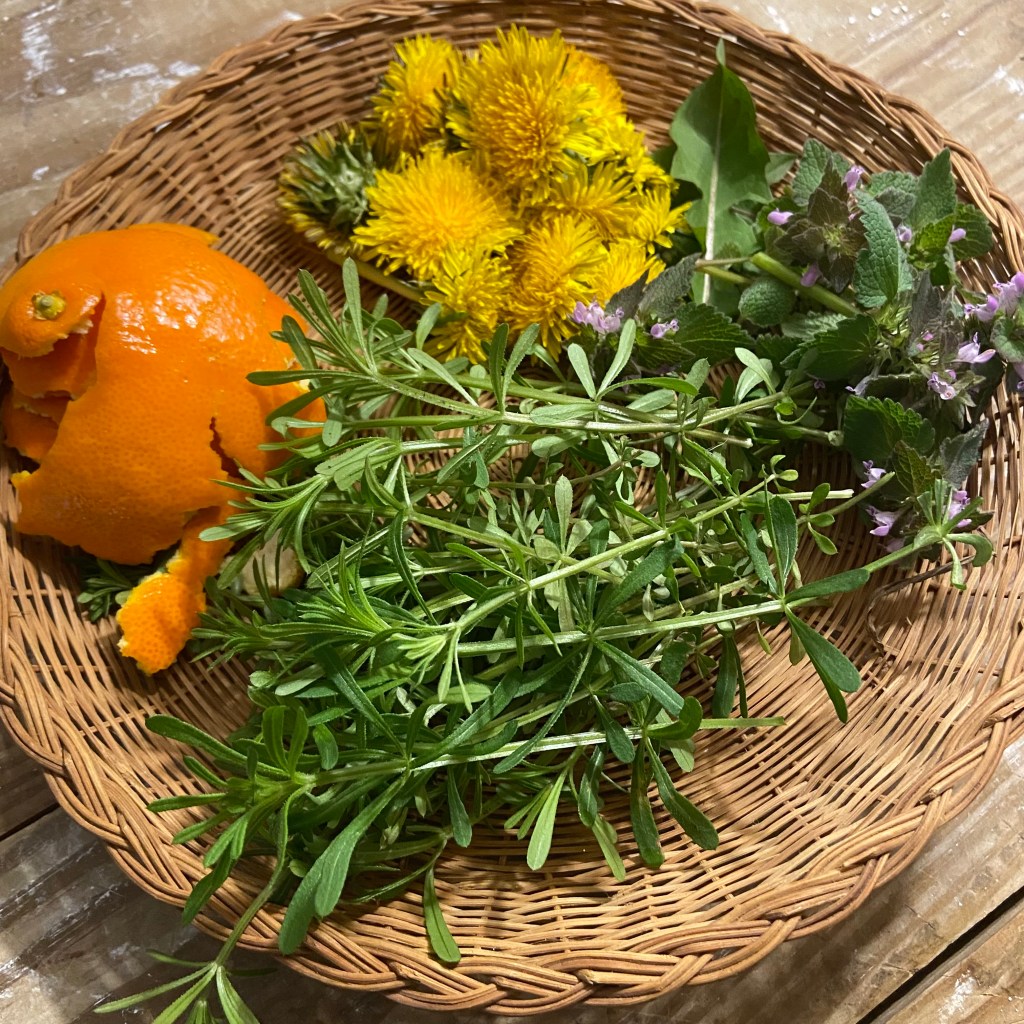
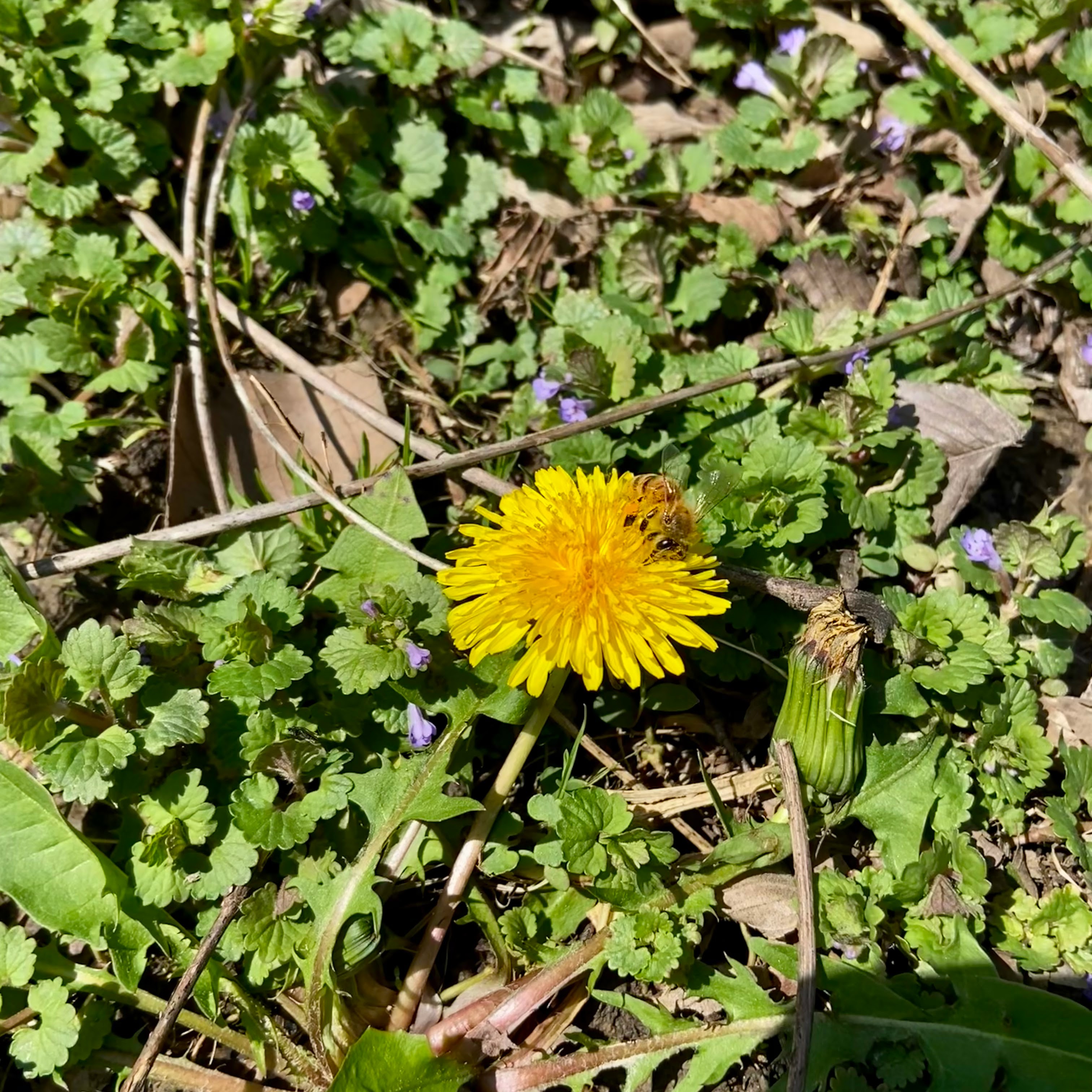
    1. Dandelions. These bright yellow flowers are among the first to pop up in spring and may bring dismay to some. But to wildcrafters, they are a treasure trove! Not only do they amend the soil wherever they grow, but the flowers are full of vitamins, minerals, and antioxidants. They work to regulate blood sugar, detox the liver, and in general clean you out after a long winter. The leaves can act as a diuretic, lowering blood pressure and aiding in digestion. So the next time a dandelion shows its golden face, don’t try to dig it up (it’ll just come back anyway), instead look for a way to incorporate it into a tea, salad, or bread recipe.
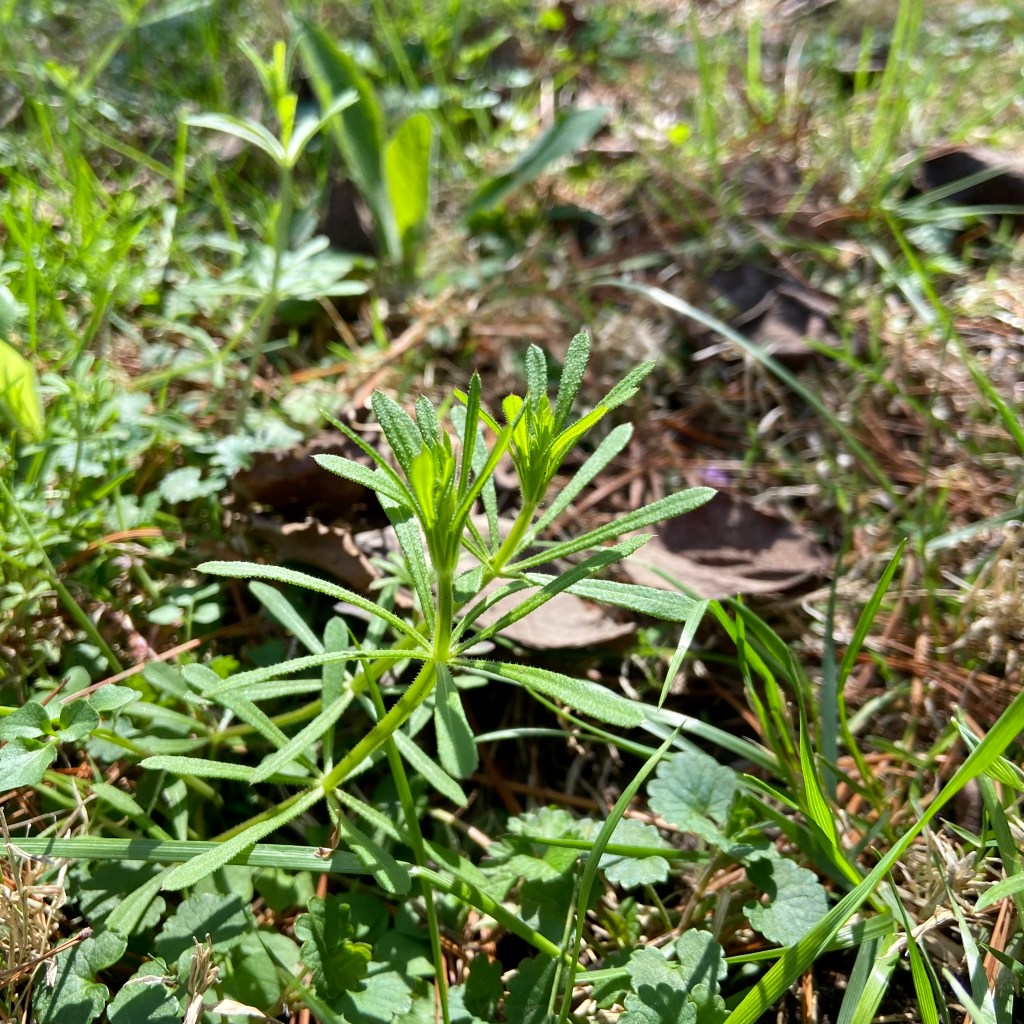
    1. Cleavers. This sticky plant may not grow everywhere, but if it grows near you consider yourself blessed. Even if it does seem to be trying to take over the whole yard. Cleavers are one of the strongest lymphatic system cleansers in nature. While more potent than over-the-counter medicine, this herb is very gentle with no bad side effects, unless you are a rare creature with an allergy to cleavers. An immune system booster, this funny-looking “weed” is also anti-inflammatory and there is even research to explore its use as a cancer treatment.
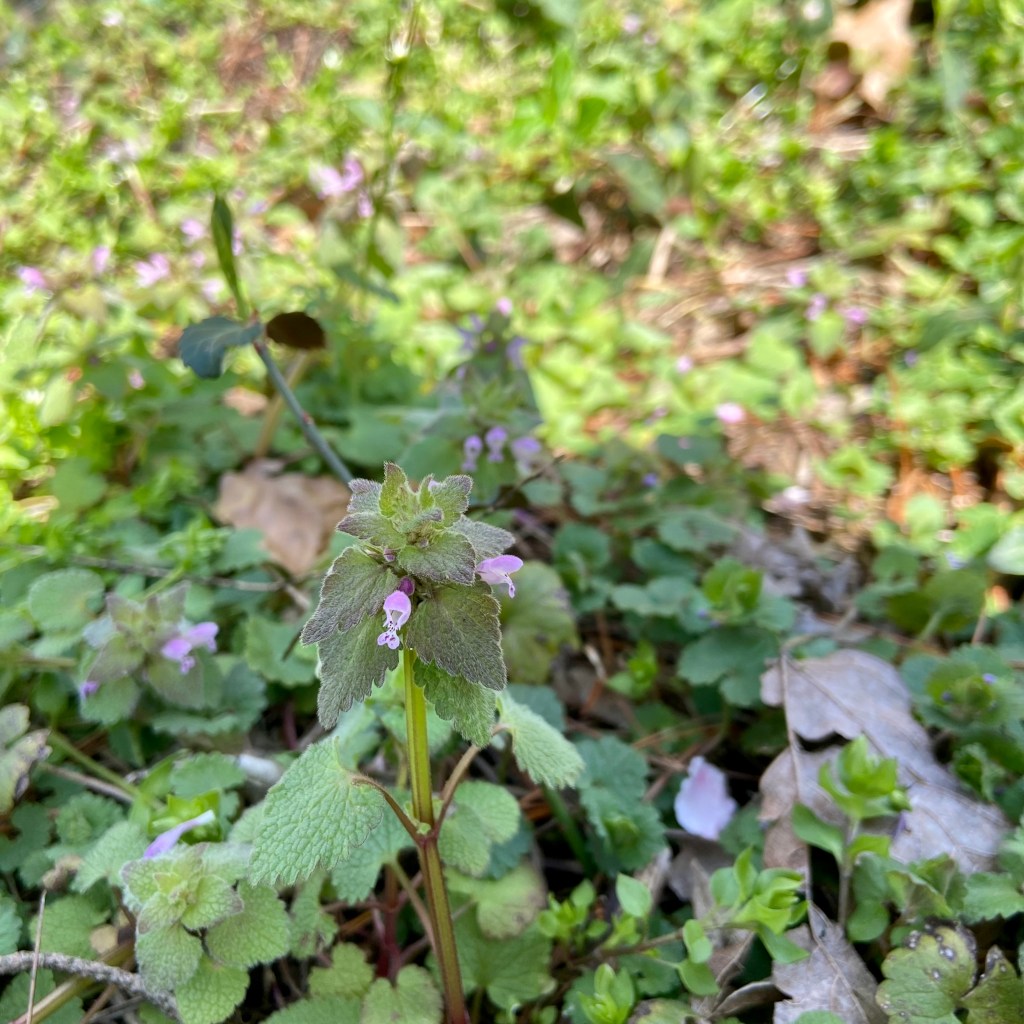
    1. Purple Dead Nettle. How often have you driven past an empty field and seen a thick carpet of light purple flowers? Those were likely Purple Dead Nettle, which tends to grow in dense clumps and patches. This edible green belongs to the mint family, contains more nutrients than spinach, and is justly considered a superfood. Amazing! Packed full of Vitamins A, C, K, iron, and fiber, this little plant also holds antioxidants that support a healthy gut and heart. It boosts the immune system and reduces allergy symptoms. I could go on and on, but I think it’s easy to see how this herb earned its place in my recipe.
    2. Organic Orange Peel. I include orange peel in this recipe for an added dose of Vitamin C and flavor. 
    3. Organic Pure Unfiltered Honey. This tea does not have to be sweetened, but I prefer it with a swirl of honey. It brings out the other flavors, tones down the “green” taste, and comes with its own impressive array of benefits.

    When you go to harvest your herbs, be sure to verify what you are picking before you put it in a tea. All of these plants are easy to identify with a little looking online or in an herb book. You also want to pay attention to where you harvest from. You don’t want to use anything that has been sprayed with pesticides, or herbicides or is growing near a busy road or pet areas. No dog tea for me, please!

    Once you have successfully identified your plants the best time to pick them is in the morning before the sun gets hot. This is when they are the most potent. You can dry them if desired by hanging little bunches of them upside down somewhere dark, dry, and well-ventilated or you can use a drying rack or dehydrator for faster drying. Store the dried herbs in airtight glass containers, like a quart jar, away from direct sunlight and label them to avoid later confusion. Whenever possible, I prefer using fresh herbs, as drying reduces their potency.

    Brewing The Tea

    I do not have amounts for this recipe as I always go by what feels/looks right. Something around equal parts of each herb. I do use significantly more dandelion flowers than leaves as the leaves can get bitter quickly. But some might like more and some less, so feel free to adjust. Experiment and find your favorite blend! 

    Brewing the tea is very easy. If you are using fresh ingredients, put water in a saucepan, add the orange peel, anywhere from a few strips up to the whole peel, and bring to a boil. Once it boils, remove from heat, add the herbs, cover, and let steep for 5 minutes. You can let it go longer if you like it stronger, but the longer it sits the more the bitter green taste comes out. Once it reaches the desired strength, strain it into your mug, stir in some honey, and enjoy a mug of delicious wildcrafted tea!

    Wildcrafted tea is a simple yet meaningful way to bring nature into your daily routine. Not only does it offer delicious flavors and health benefits, but it also fosters a deeper appreciation for the plants growing around you. Try this blend or experiment with your own combinations, and let me know what you discover!

    Happy foraging and sipping!