Lately, I’ve been seeing and reading lots of things about people’s plans for their fall garden. What seeds they’ll be planting and where they’ll be putting what starts. It’s a whole new chance to get more out of your garden, especially with how lots of gardens seemed to have struggled this year.
Well, we have plans too, but they aren’t like those. I’m afraid that if we planted anything, we’d just be setting ourselves up for lots of the same problems we’ve been having.
Our dirt is a stubborn mess of clay that retains water and refuses to let roots do their thing. It needs lots of amending for nutrients and something to break up the clay.

Our plan starts here. Someone gave us rabbit hutches and once they have a base to sit on to keep them off the ground, we can put them to use. We’ve looked into several different breeds of rabbits, particularly New Zealand’s and California White’s. But any breed of rabbit would work.
Rabbit manure is one the best things you can use to fertilize your garden for several reasons.
- It is a “cold” fertilizer as it is not high in nitrogen. This means you can put it directly into the garden without having to let it sit and age first.
- It is nutritionally rich. It contains a fairly balanced amount of nitrogen, phosphorus, and potassium, as well as calcium, zinc, copper, magnesium, and boron.
- It is high-fiber due to the rabbit’s plant based diet. This means it improves soil texture. It helps sandy soil hold water better, but also helps break up clay soil.
- It is good for soil life. Earthworms and beneficial microbes love it and multiply well, creating a healthy, balanced soil ecosystem.
- It is easy to work with. Since it comes in dry pellets it is easy to spread over the garden or work into the dirt.
- It has a gradual nutrient release. This cuts down on the risk of rain washing away most of the benefits at once and lets the plants feed over time rather than just a nutrient dump.
- It is a great compost booster. If you do decide to compost it, it works as a powerful nitrogen “green” to balance out carbon-heavy “browns” like leaves or straw. It also helps heat the compost pile up to destroy harmful bacteria.
All in all, it sounds like a great addition, and we can hardly wait to see the changes it makes in our garden.

Another step in our plans is worms. While rabbit manure will encourage worm production, we also want to start a worm farm. Not only will it supply plenty of worms for the garden, but also worm castings, which are great sources of nutrients as well. A worm farm also has the added benefit of making the hunt for fishing bait a whole lot easier. 🙂

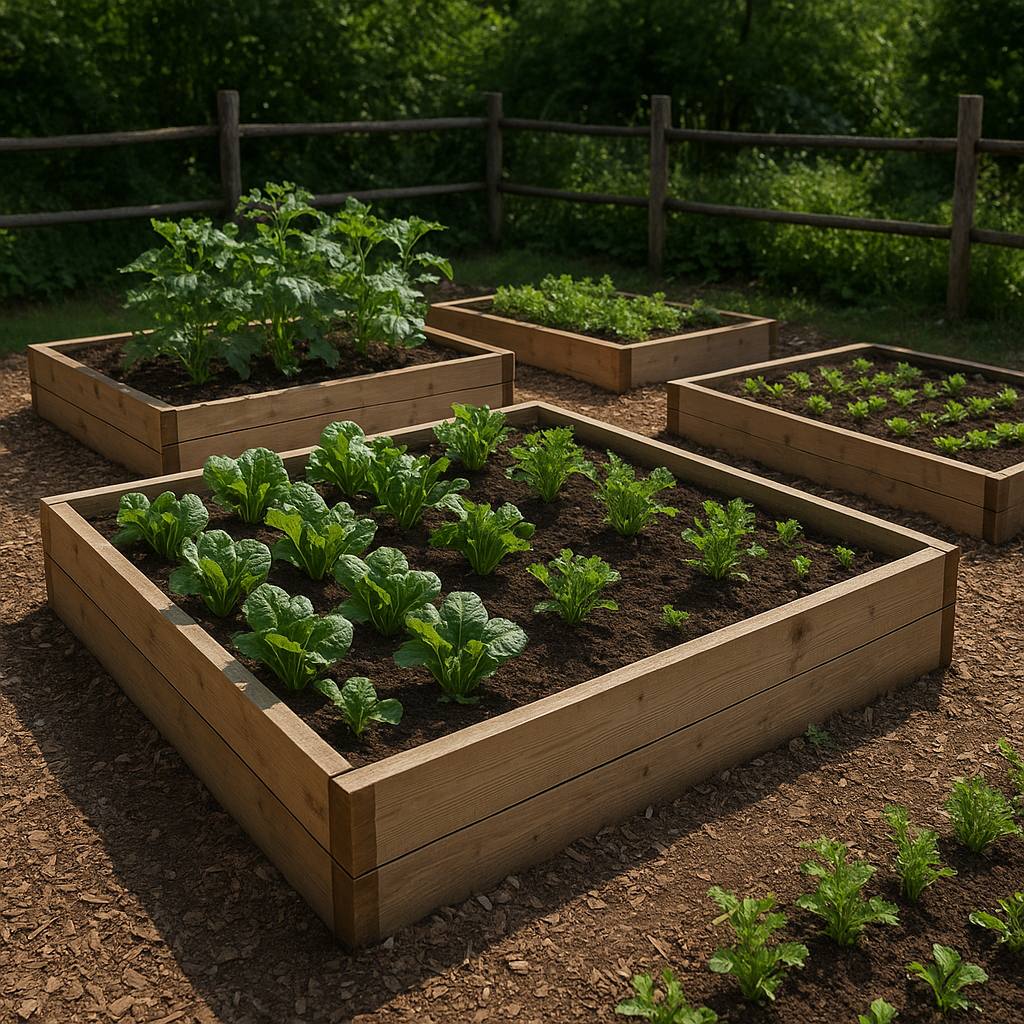
We also hope to start building our own raised beds. This would cut down on the amount of space we would need to amend, allow us to tweak certain beds for certain crops (more sand for carrots, etc.) and give plant roots more space to grow before they hit our high water table.
The beds would be 4′ wide and a mix of 12′ and 8′ feet long. We have lots of old, punky wood that has laid around for years. We would put that in the bottom of the beds before filling with dirt. The wood pieces would break down over time continuing to add to the soil and let us use less fill dirt.
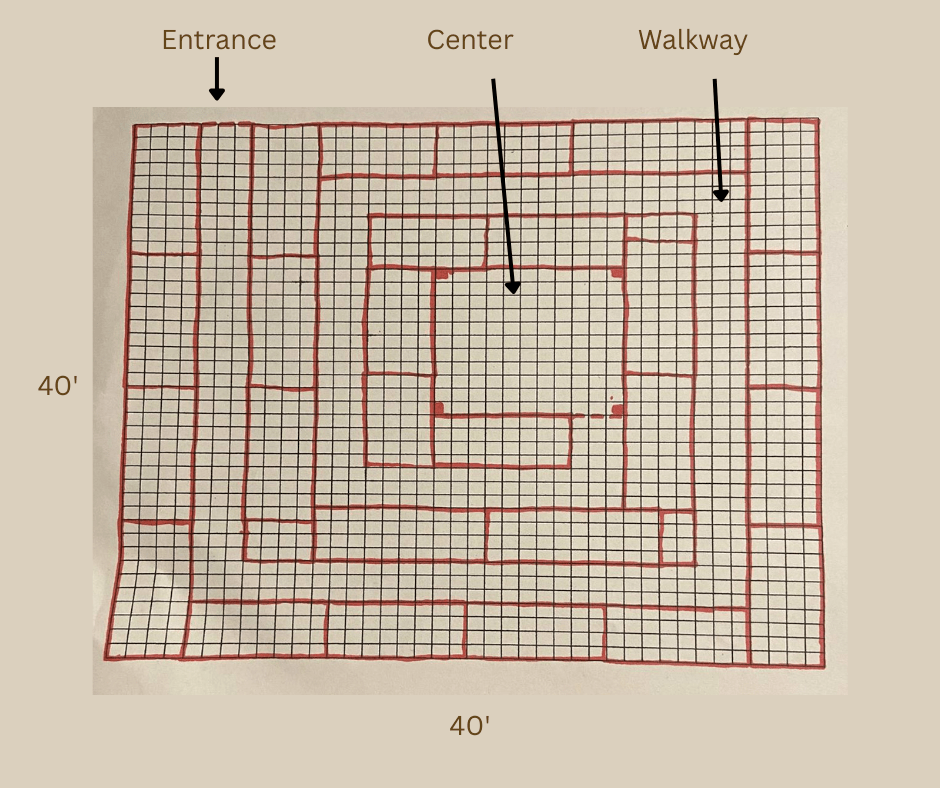
Tim drew up these plans and I like how the finished product looks in my head. We would put a gate at the entrance and then we would be able to let the rabbits or ducks/chickens loose in the walkway without worried about them getting out. This layout also maximizes the space we have while still allowing access to both sides of the beds.
I know it is still a ways out before we will have this all finished. But it gives us a starting point and some basic steps to get us where we want to be. I can’t wait until our garden looks somewhat like this.
 Bringing Life