Category: Uncategorized

  • This Isn’t the Garden I Imagined

    This Isn’t the Garden I Imagined

    I had big dreams for this year’s garden. Rows of thriving vegetables, plenty to can and freeze, a handful of Instagram-worthy harvest baskets, and maybe even one of those adorable pictures of a toddler holding a sunflower twice their height.

    Instead, I have crabgrass that’s warring with horseweed over prime acreage, tomatoes that can’t decide if they’re dying or just being dramatic, and pea plants that look like they got in a fight with a thunderstorm.

    Things started off so well. Tim and I were finally going to be able to work on the garden every day without spending 20 minutes loading kids in the van for a 7 minute drive. We had planned the work in detail and were all set to work the plan.
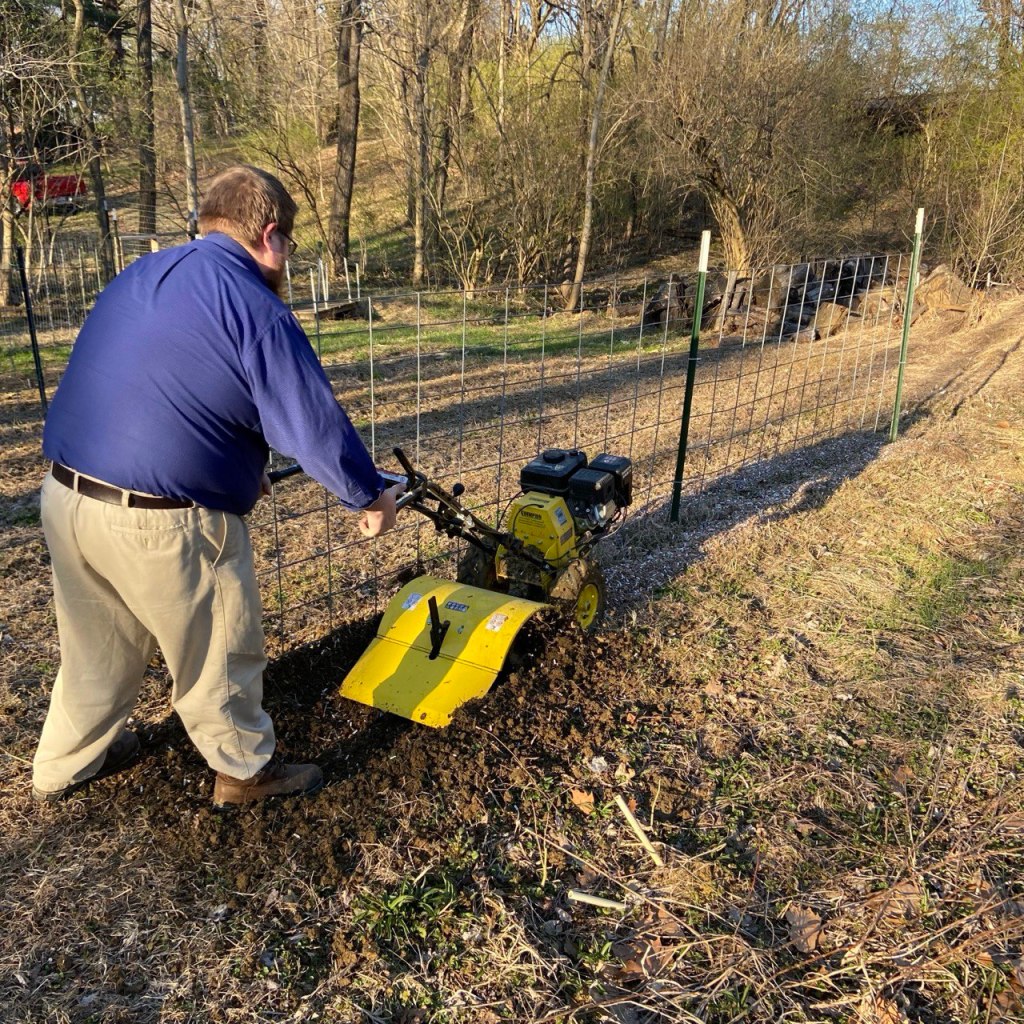
    A man using a yellow rototiller to prepare a garden bed along a fence line.

    And the plan took off beautifully. We got our seeds, starter trays, and starter soil mix ordered in plenty of time, and were ready to go. In one day, we planted 80 tomato seeds and when it came time for the first transplant, a whopping 75 tomato starts were healthy enough to move into something bigger. 
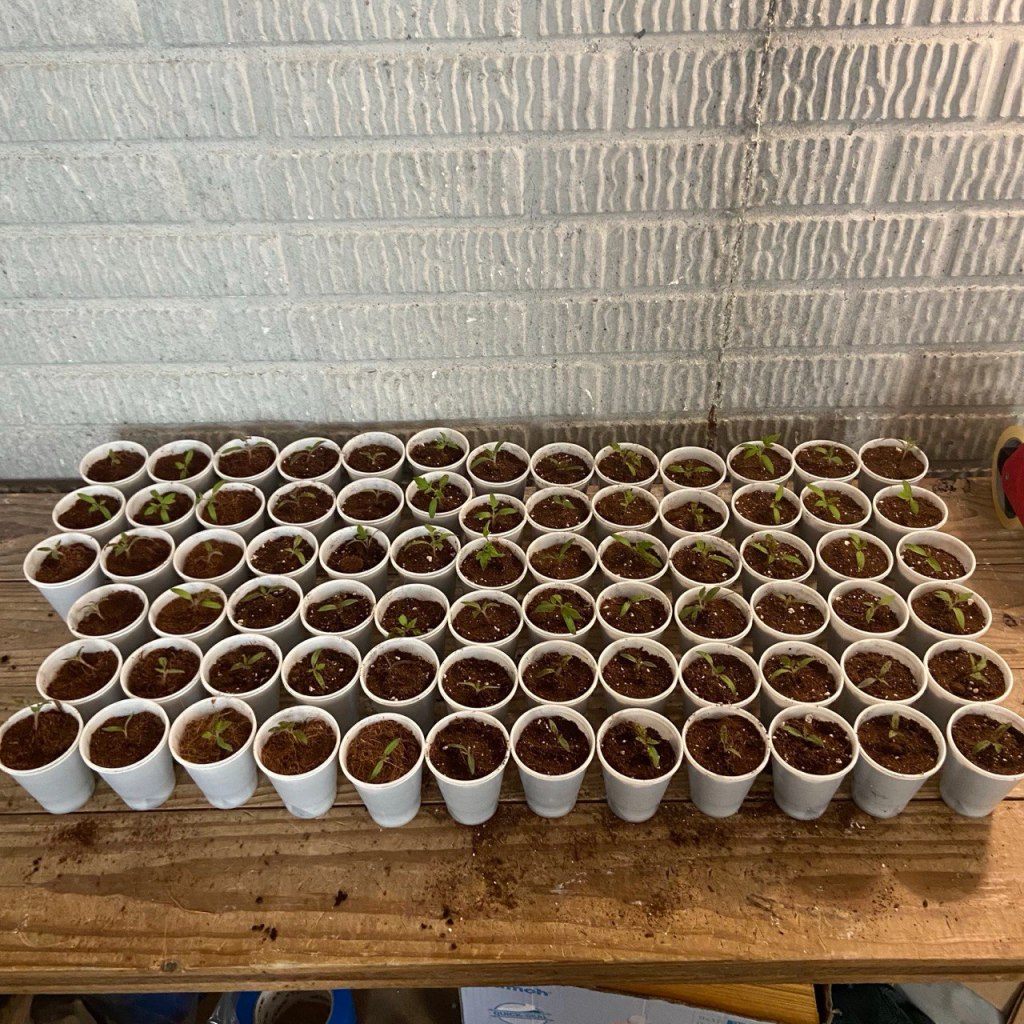
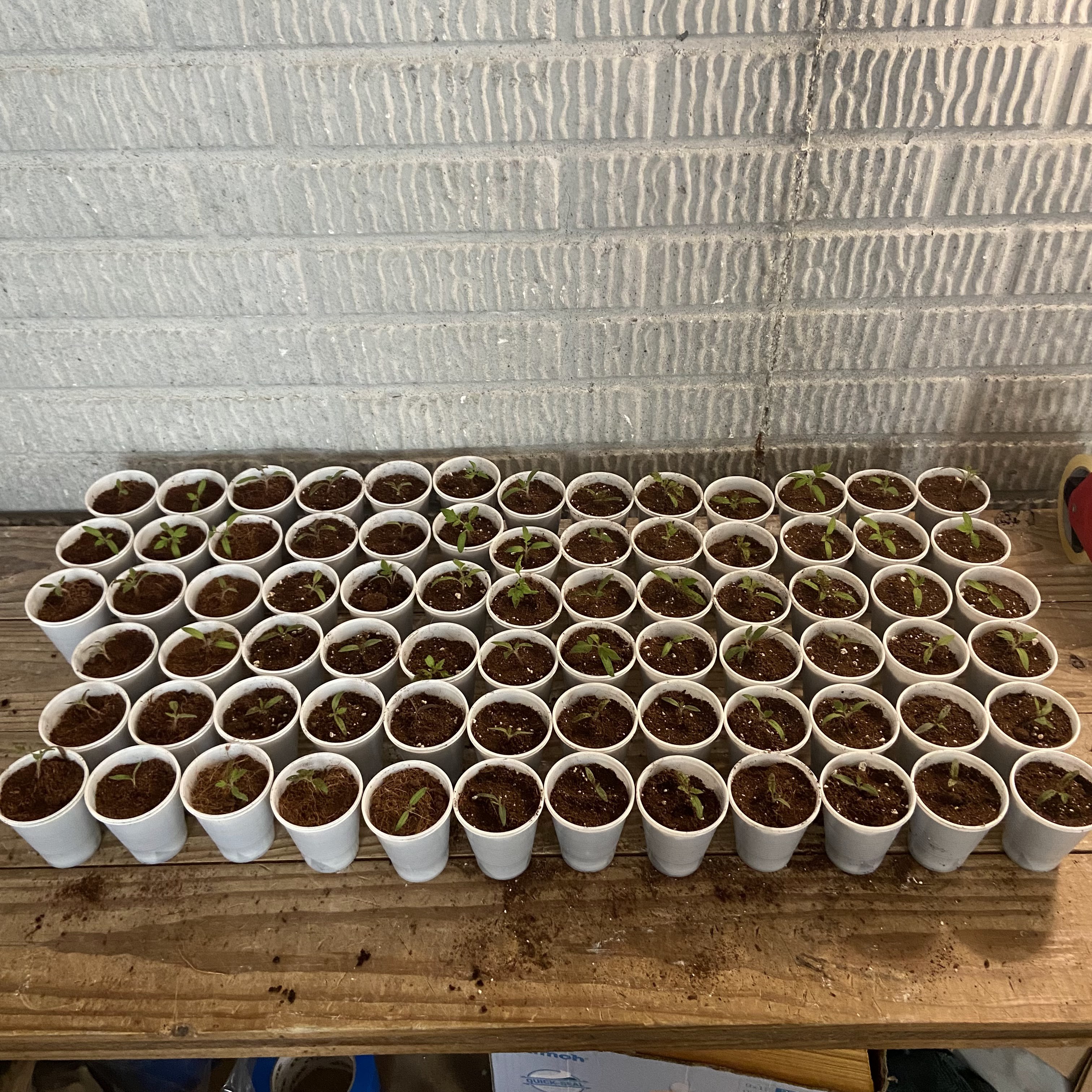
    Rows of young tomato seedlings growing in small white plastic cups on a wooden table.

    Things were looking so hopeful. We had a plant shelf set up with heat mats and grow lights and our peppers, tomatoes, and basil seemed to be taking off.

    That’s when things started to change. First it was too much water so I cut it back. Then things started wilting from drying out. To start hardening the stems off, I would carry all the trays outside to sit on the deck. Then one of my helpers tripped on the stairs and spilled a tray of tomatoes and the cat dug up our starter sweet potato. 
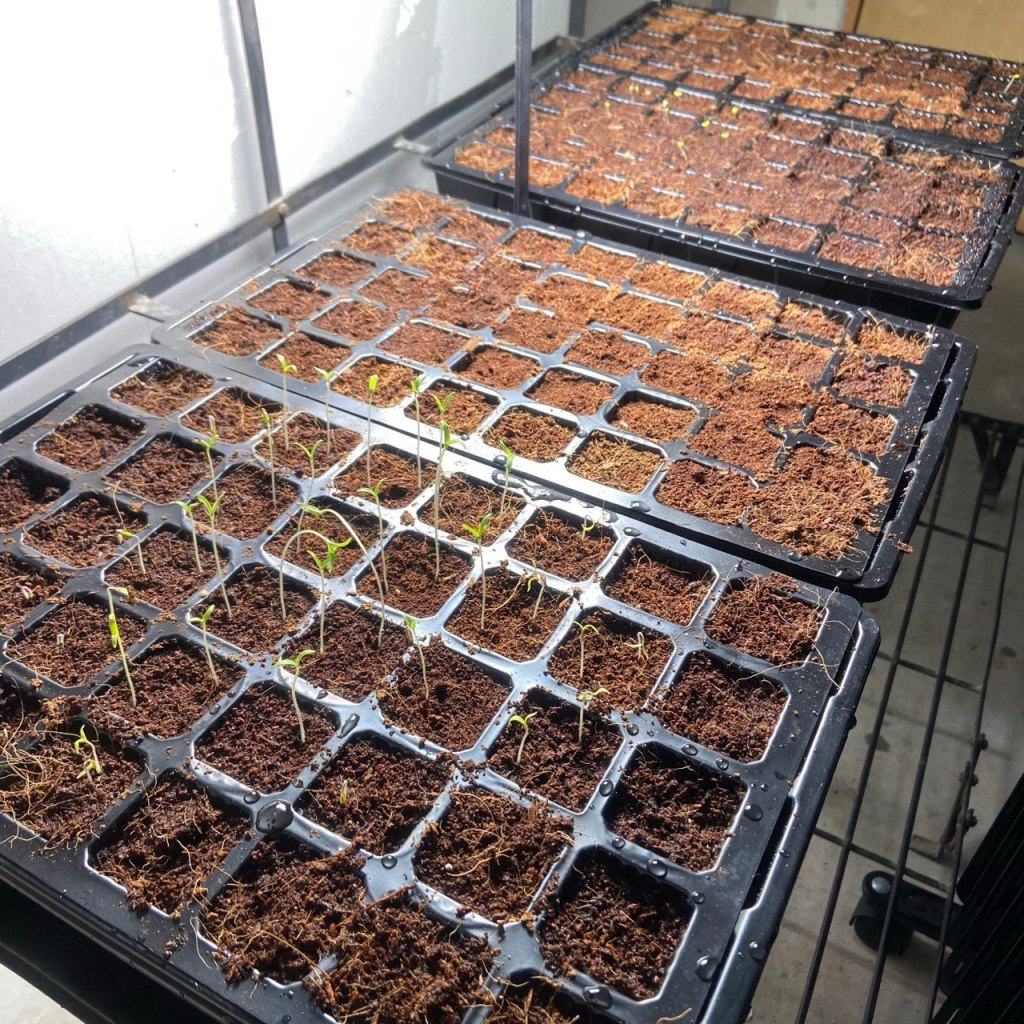
    Tiny tomato and pepper seedlings reaching up from soil blocks under indoor grow lights.

    Meanwhile, out in the garden, radishes, turnips, and beets were popping up like weeds. That alone was enough to keep us going. If we could just get these plants in the ground, surely that would fix a lot of the problems.

    Only nature had other plans. Rain set in like you wouldn’t believe, and before we knew it, the river had moved from a quarter of a mile away into our backyard. A new record for flood levels here. We literally had ducks swimming in our garden. Only they were wild ones, not ours.

    A wild duck swimming through floodwater in a backyard garden, with a road sign partially submerged.

    Finally, everything dried out enough to put plants in the ground outside. Our dirt here is terrible with high clay content, but we mixed in fertilizer and shredded cardboard. Things were looking hopeful. 

    Sadly, there weren’t 75 tomato plants to put outside by that point, but we planted what we had. Over the next several days, we planted 3 kinds of tomatoes and 5 kinds of peppers. We also slowly gave up on any kind of harvest from our beets, radishes, and turnips. I think the heat was too much for them this year.
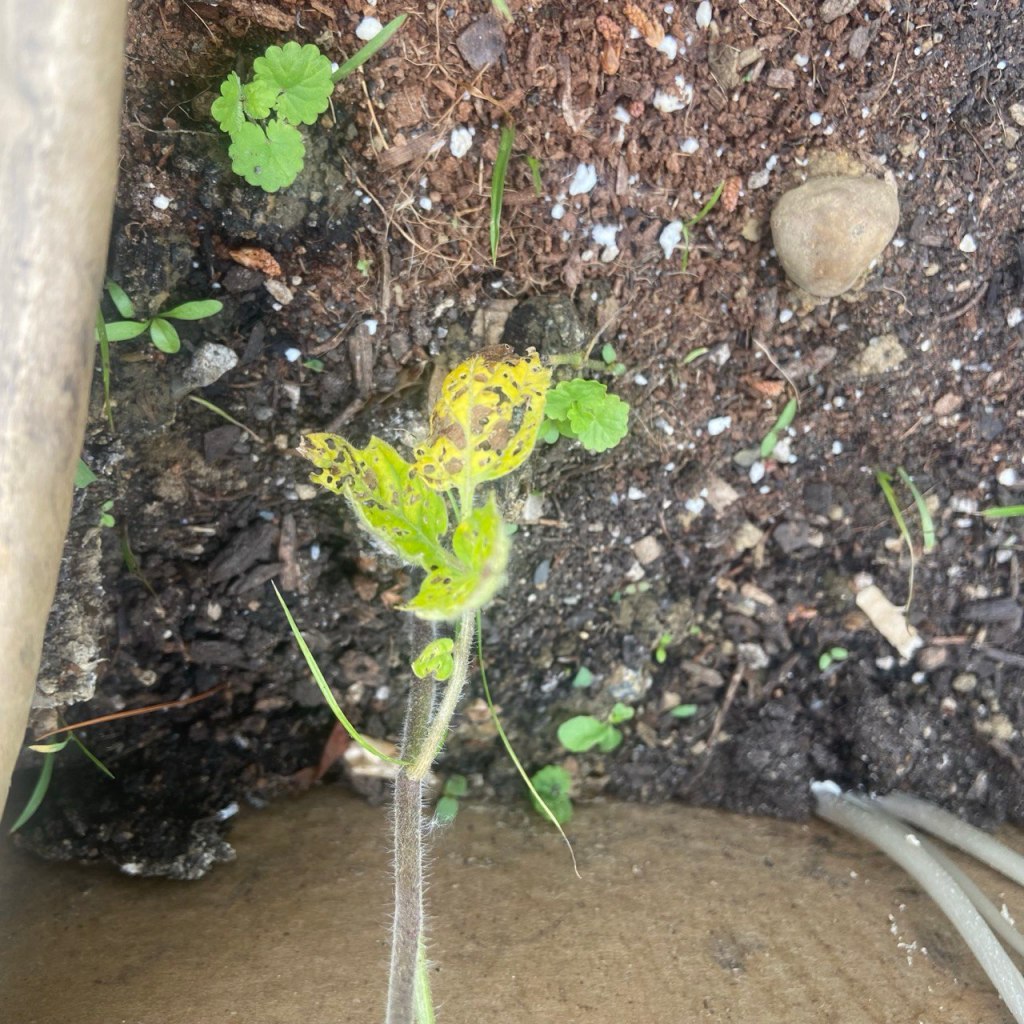
     A single yellowing tomato seedling with damaged leaves struggling to grow in the dirt.

    The cucumbers seem to be thriving, but I haven’t even planted beans yet, and if weeds could run, I’d probably see some doing victory laps around the garden. It’s been humbling, honestly — all the things that didn’t go according to plan. The truth is…this isn’t the garden I imagined. But maybe that’s okay.

    Some things are growing. Some things are struggling. And so am I. At 40 weeks pregnant and counting, some days I feel wider than I am tall. (Thankfully, feelings can be deceiving.) But buried in the weeds and bug bites and lopsided rows, I’m starting to find a few quiet lessons — ones I didn’t plan to plant but probably needed anyway.

    I’m learning that just like in life, we don’t always get the season we planned for. Sometimes we plant in faith, water with tears, and wait — not sure what will come of it. But God isn’t just after straight rows and full baskets. Sometimes He’s growing patience, trust, and perseverance where we only see crabgrass and chaos.
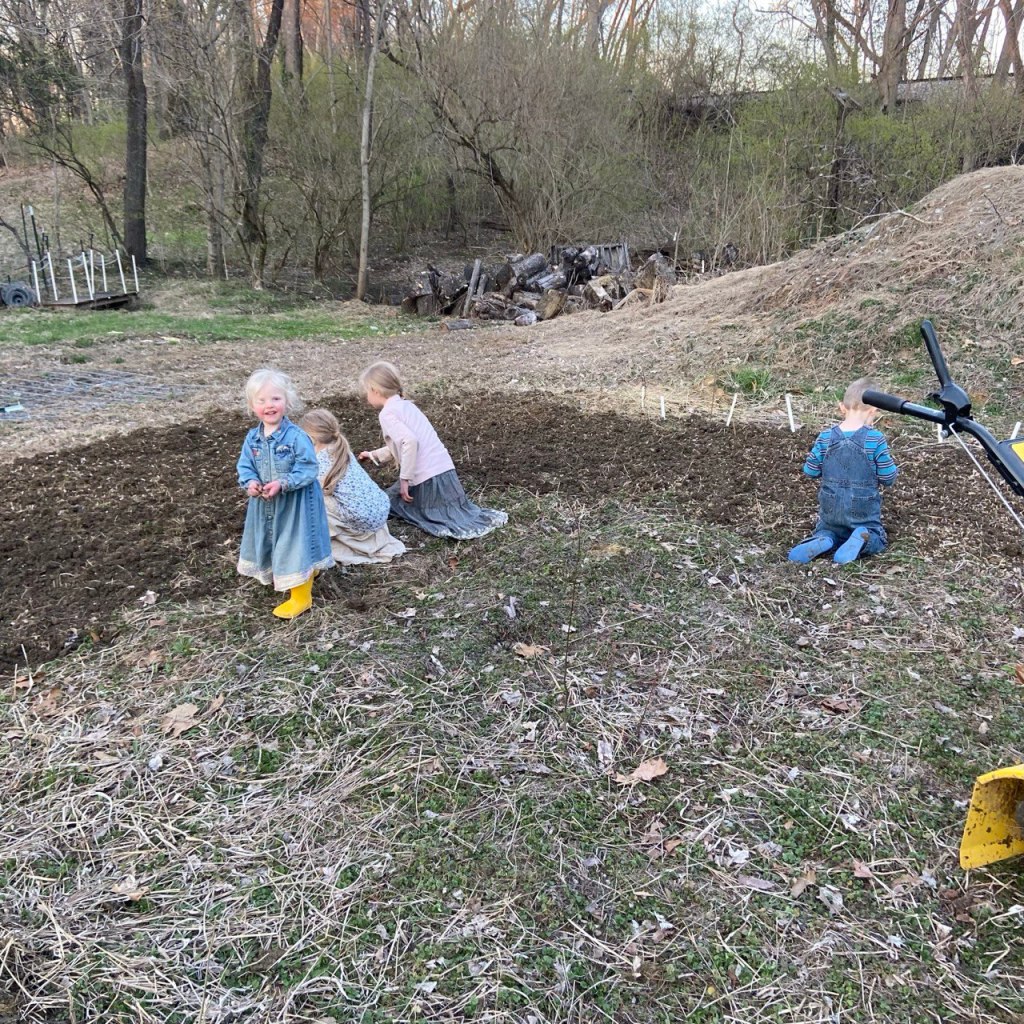
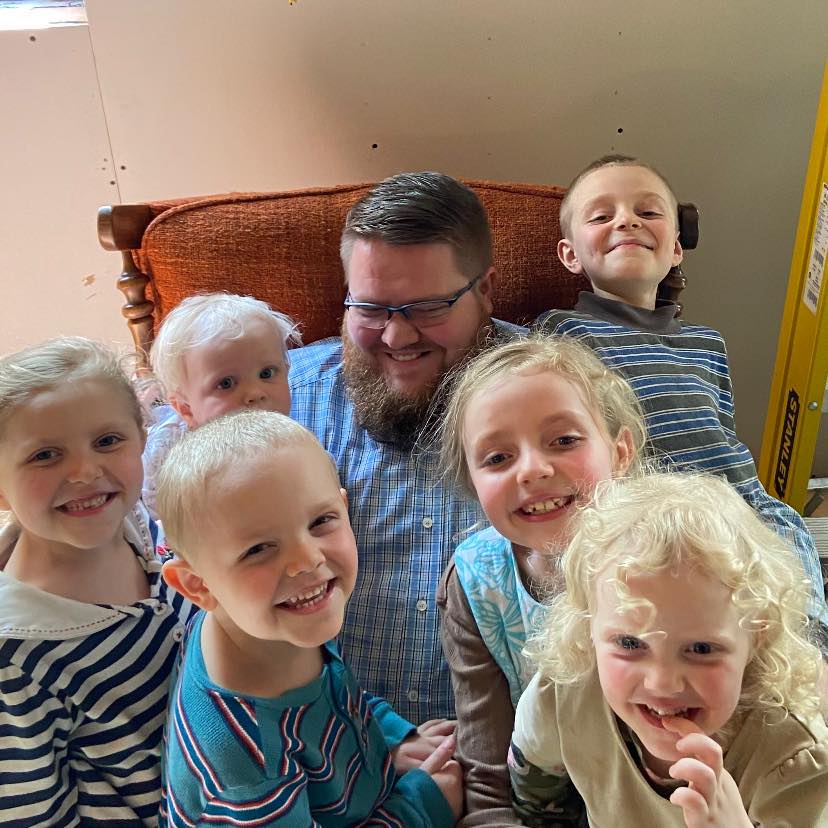
    Four small children planting seeds and digging in a garden bed on a spring day.

    Maybe the real harvest this year won’t be measured in jars or baskets, but in grace — grace for the process, for the setbacks, for myself. Every weed I pull and every crooked row reminds me that growth isn’t always pretty, but it’s still progress. This garden might not be picture-perfect, but it’s real, it’s ours, and it’s still doing its work — in the soil and in me.

    And thankfully, there’s always a fall garden — and next year.

  • Our Favorite Buttermilk Pancakes (Make-Ahead & Fluffy!)

    Our Favorite Buttermilk Pancakes (Make-Ahead & Fluffy!)

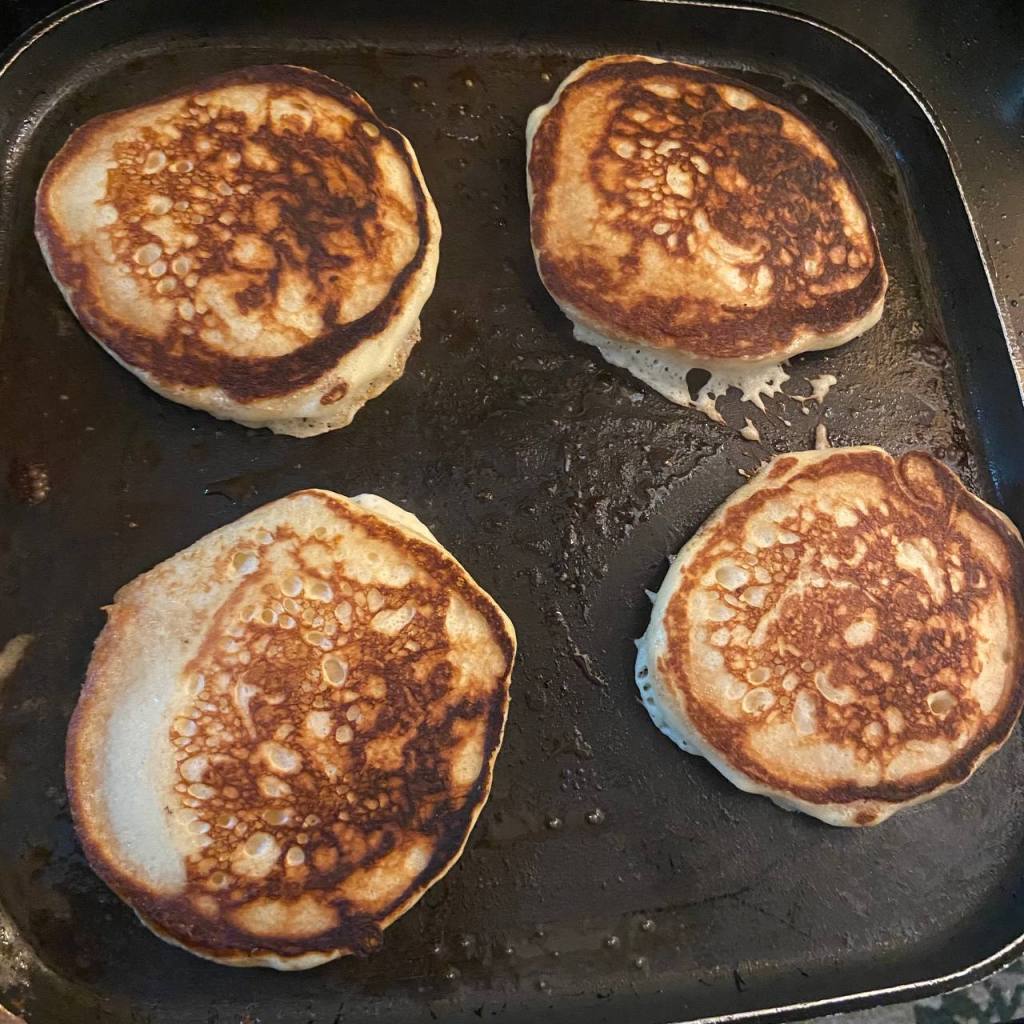
    If you are like me, then from time to time, you have children—or even a spouse—who ask for pancakes. While I’m thankful it doesn’t lead to a situation like If You Give a Pig a Pancake, it still sparks some familiar questions: Do I want classic or fluffy? More ingredients or fewer? Regular or buttermilk?

    For years, I wrestled with that dilemma. We don’t buy pancake mix, so every time I needed to make some from scratch, my mind would start scrambling. What recipe did I use last time? Was that the favorite or just another okay one?

    Over time, I started narrowing down the options. I discovered that my family’s favorite pancakes were fluffy, a bit more complex in ingredients, and made with buttermilk. That helped—sort of. It still left a lot of recipes to sift through. Pun intended. 🙂

    And then, there was the timing. If I got up and started mixing the batter, I had maybe 5–10 minutes before my “Kitchen Crew” showed up to help. Some would come in jabbering a mile a minute, eager to grab something—anything—and get to work. Others would stumble in, rubbing eyes and stifling yawns, but still determined to be part of the process. While not a problem, it did highlight another preference. Pancake batter that could be made ahead. 

    If I could mix up the batter the night before and only have to flip them the morning of, that would save a ton of time. Especially with the size of my family and their colossal appetites. A batch of pancakes that made 8-10 2″ pancakes just didn’t cut it. 

    So you can imagine my relief when I found a recipe that checked all the boxes. It made fluffy pancakes that were easy to mix up without skimping on the ingredients and called for buttermilk. It had yeast in it so it could be made ahead and put in the fridge overnight to fluff. And it even came with some bonuses. It wasn’t too sweet and it didn’t even have to be doubled. That’s what I call a winner! 

    It took all of one time to know we had finally found our favorite pancake recipe. This time, I ignored the voice that said I’d for sure remember which recipe we liked, and wrote it down on a recipe card. Not going to lose that one!

    I wish I could remember where I originally found the recipe—I’m pretty sure it was Pinterest, but the exact source is lost to time. If you recognize it, let me know so I can give credit where it’s due!

    INGREDIENTS

    4 Cups Flour

    1 Tablespoon Yeast*

    1 Tablespoon Baking Powder

    2 Tablespoons Sugar

    2 Teaspoons Baking Soda

    1 Teaspoon Salt

    4 Eggs, Lightly Beaten

    4 Cups Buttermilk

    1/4 Cup Oil

    INSTRUCTIONS

    In a large bowl or the bowl of your stand mixer, whisk all the dry ingredients. Add wet ingredients and mix until just combined. Cover and refrigerate 8-24 hours. Stir before cooking. 

    Makes about 20-24 3″ pancakes. 

    *If you use active dry yeast, activate it in a 1/4 cup warm water or buttermilk and let sit for 5-10 minutes, while it blooms. If you use instant yeast, just follow the recipe as given.

    So whether you’re flipping for a crowd or just need a little breakfast win, I hope this recipe brings as many smiles to your table as it has to ours. And if your Kitchen Crew shows up to help… pour them a little extra syrup for me.

    Just don’t blame me if giving your kid a pancake leads to building a treehouse and finding a harmonica. 😉

  • The Village Beneath The Trees

    The Village Beneath The Trees

    Welcome back, friends!

    Do you ever have one of those ideas that just kind of percolates or simmers until it demands your attention? An idea that you toss around until you feel you have to work on it?

    Maybe it’s a new recipe, or an outdoor project, or a hobby you’ve been meaning to try. Whatever it might be, you can only keep it simmering on the back burner for so long before it threatens to boil over.

    I’ve had one of those ideas. It’s been on the back burner for the better part of ten years, only coming off for the occasional stir to see if anything had changed.

    But now? The pot’s boiling over.

    What if I were to tell you that somewhere, hidden under trees and beside hillocks, is a little village?

    A village where a squirrel-girl lives in a crooked house.
    Where a playful chipmunk loves to set off pinecone cannons.
    Where a quiet hedgehog keeps a bug collection with all the proper Latin names.

    Welcome to Thistledown Meadows.

    This place started as a tiny spark. It jumped into my mind one day as a small striped chipmunk who could be the poster child for innocent chaos, and a red squirrel who loved flowers and tripped over her own tail. Often. Then came a sturdy hedgehog with a proclivity for big words.

    Sometimes, the pot barely simmered and nothing would come. Then things would start to heat up, and bits and pieces would fly so fast I could barely keep up—a fox with a mysterious background, a mine that had been shut down, a childlike otter with a firefly lantern.

    And Thistledown Meadows was created.

    Now, as life keeps jumping with children, gardening, and preparing for a new baby, something about this little village—with its badger blacksmith and mouse baker—keeps calling me back. So I’ve officially decided to see where this story goes.

    I’m nowhere close to done yet. I’m still in the middle of laying out characters, fleshing out the plot, and designing the cottages. I’ve been working on creating warm, whimsical illustrations for the coming book, as well as more realistic images for sharing along the way.

    I don’t have any kind of timeline yet. This definitely isn’t a “Get your copy here” post. I just wanted to share that I’ve got a story I’m excited to be bringing to life, bit by bit.

    Why Thistledown? Maybe because I need it right now—a quiet place full of character, kindness, and the kind of beauty that hides in everyday moments. And maybe, just maybe, someone else does too.

    So I’ll keep creating. Keep sketching crooked shutters and curious creatures. And I’ll share the journey along the way.

    Thanks for being here at the beginning.

  • Family of Tortilla Fans

    Family of Tortilla Fans

    Tortillas, Anyone?

    I don’t know about you and yours, but in this house, we like tortillas. And I mean like tortillas.

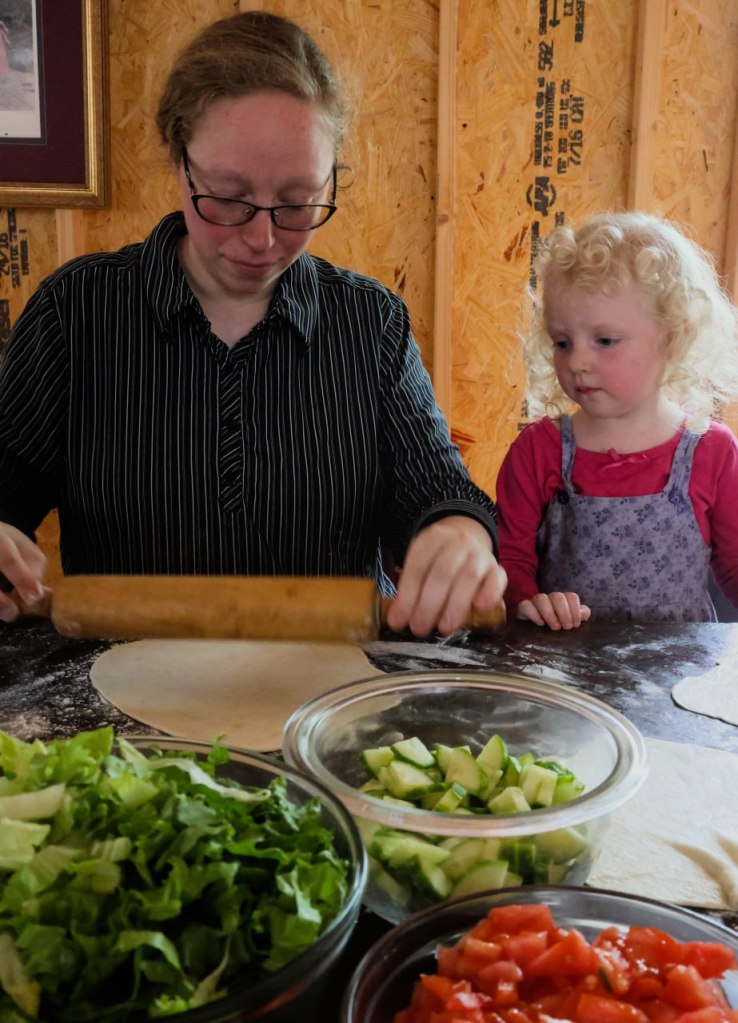
    If I want kids jumping up and down while screeching in delight, all I have to do is casually mention that we’ll need tortillas made for supper. Whether it’s tacos, fajitas, enchiladas, or burritos, those tortillas are always a big hit.

    In fact, with how much Tim and the kids (and I) love tortilla-based meals, you’d think he had Spanish roots instead of Italian.


    We started out always buying our tortillas, because making them seemed too daunting. While we really enjoyed fresh tortillas when we went out for Mexican food, it made my eyes cross and my brain itch to even think about making them.

    Then, health problems started pushing us to switch from buying everything to trying to make more food from scratch—especially things like bread and tortillas.

    Bread felt like the easier place to start, but one can only go so long without tacos or fajitas. Right?

    So I went hunting and digging and found a tortilla recipe that I decided I’d try. I gathered the ingredients—and my courage—and dove in.

    While the recipe wasn’t difficult, I worried the whole time that it wouldn’t work. And talk about time-consuming!

    Mixing the dough was easy; separating it into portions was trickier. Letting them sit, covered, for an hour or so was simple, but I stressed about them the whole time.

    The hardest part by far was rolling them out and frying them up. That first batch took over an hour—maybe two—before they were even ready to eat!


    Were they worth the hassle?
    Yes, definitely.

    One thing I struggle with is the temptation to balk at trying anything new. And for whatever reason, tortillas just seemed like one of those things.

    Now? Tortillas feel like one of the easiest things to make. Funny how it works like that, isn’t it?

    Except… I hardly ever have to make them anymore.


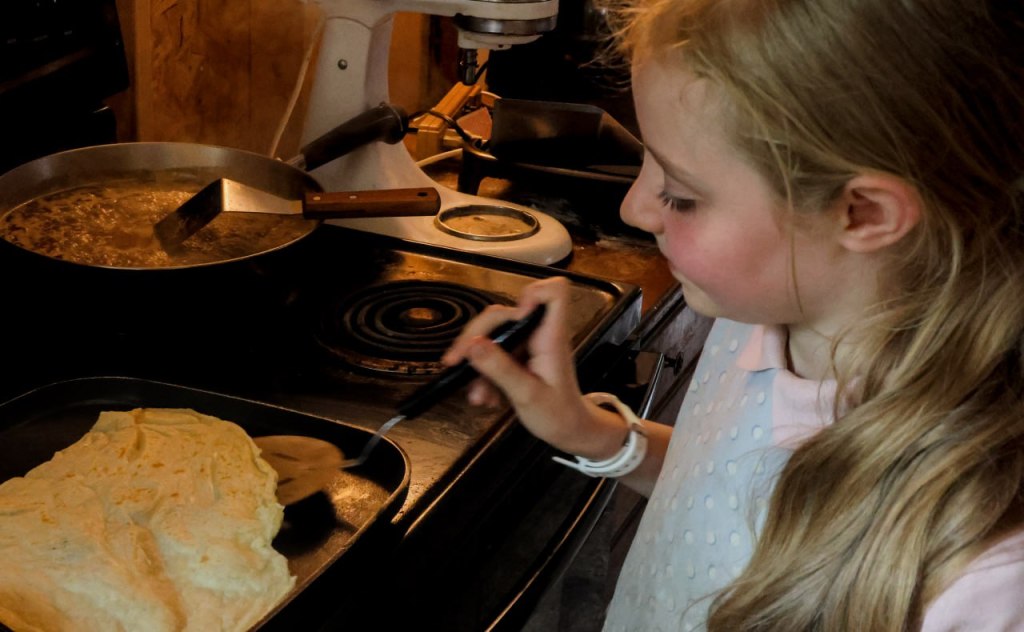
    Alayna, our oldest daughter, has done her best to establish herself as the “bread-maker” of the family. Whether it’s sandwich bread, hamburger buns, or tortillas, she practically begs to be the one to make them.

    She’s pretty pleased with herself for being able to make tortillas from memory now—and I’d say that’s not bad at all for an 8-year-old!

    I still do all the rolling myself. Micah and Alayna have both tried, but between not enough height and not enough upper arm strength, it just works better if I handle that part for now.

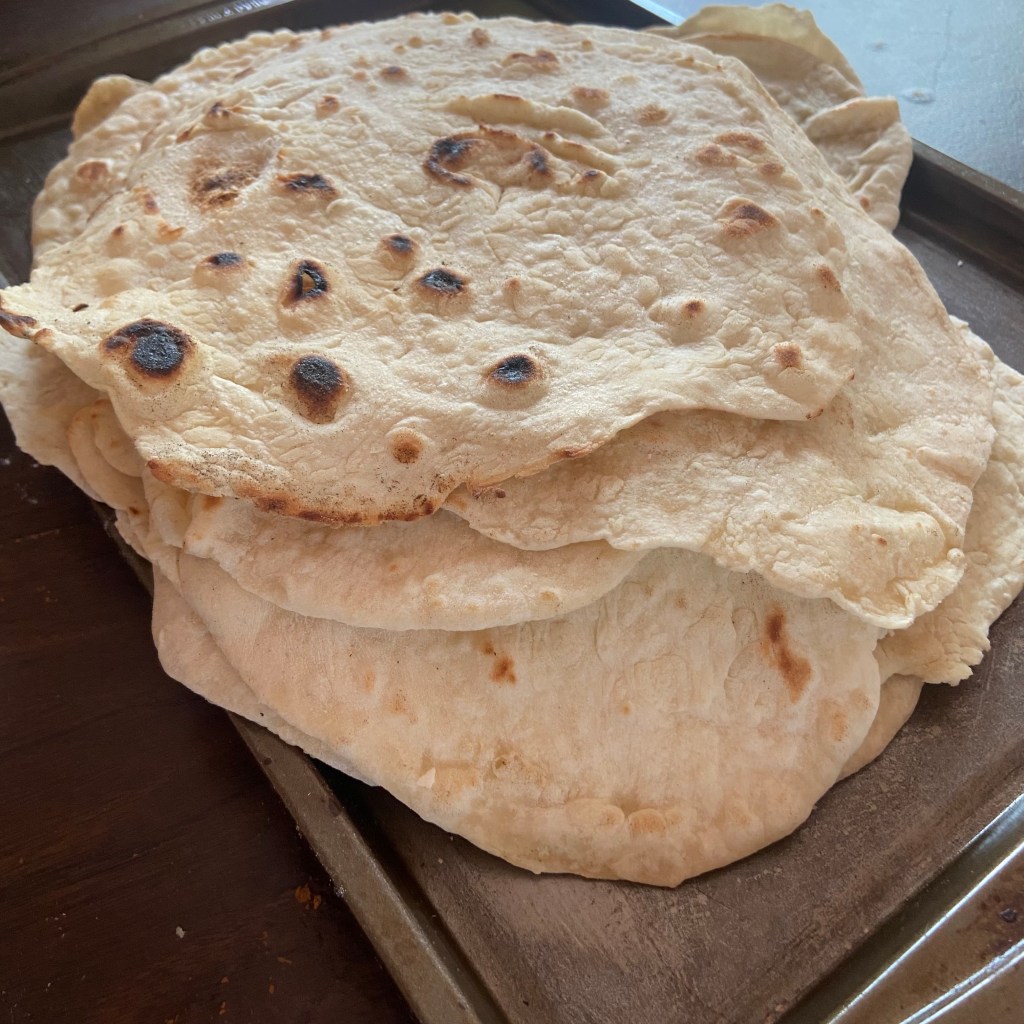
    They do, however, claim the job of frying the tortillas—and they do a pretty good job of turning out lightly browned deliciousness every time.


    What happens to leftover tortillas, you ask?
    Well, they rarely get left. But when they do, one of two things happens:

    Either the kids decide they want a snack and clamor to eat them plain, or Tim gleefully makes himself a cheesy quesadilla.

    Either way, tortillas around here have a short life—but one joyfully dedicated to making our family happy and full.

    Our Go-To Tortilla Recipe

    I don’t remember where I found this recipe, but it’s become a staple in our home. One batch never cuts it for us, but it’s a great place to start!

    Ingredients:

    • 3 cups flour
    • 1 teaspoon salt
    • 1 teaspoon baking powder
    • 1 cup warm water
    • 1/3 cup lard (or oil or butter)

    Instructions:

    1. Mix the dry ingredients in the bowl of a stand mixer or by hand.
    2. Add the water and lard, and mix until well combined.
    3. Knead (in the mixer or by hand) for at least 5–7 minutes—longer kneading makes better tortillas.
    4. Divide dough into 8 equal pieces. Flatten slightly on a lightly floured surface.
    5. Cover and let rest at least 15 minutes or up to 2 hours.
    6. Roll out each piece on a floured surface.
    7. Fry in a dry skillet on medium to medium-high heat until bubbles form and the underside has golden-brown spots. Flip and cook the second side (it takes less time than the first—usually about 30 seconds).
    8. Keep warm in a low oven (we use the “Warm” setting) on a cookie sheet until ready to eat.
  • Nature Reset

    Nature Reset

    Good day!

    Where do you go for your relaxation? When the day seems too long or the work seems too hard, what do you do to reset yourself and your family?

    For us, it often means loading all eight of us in the van and driving off into the wild.

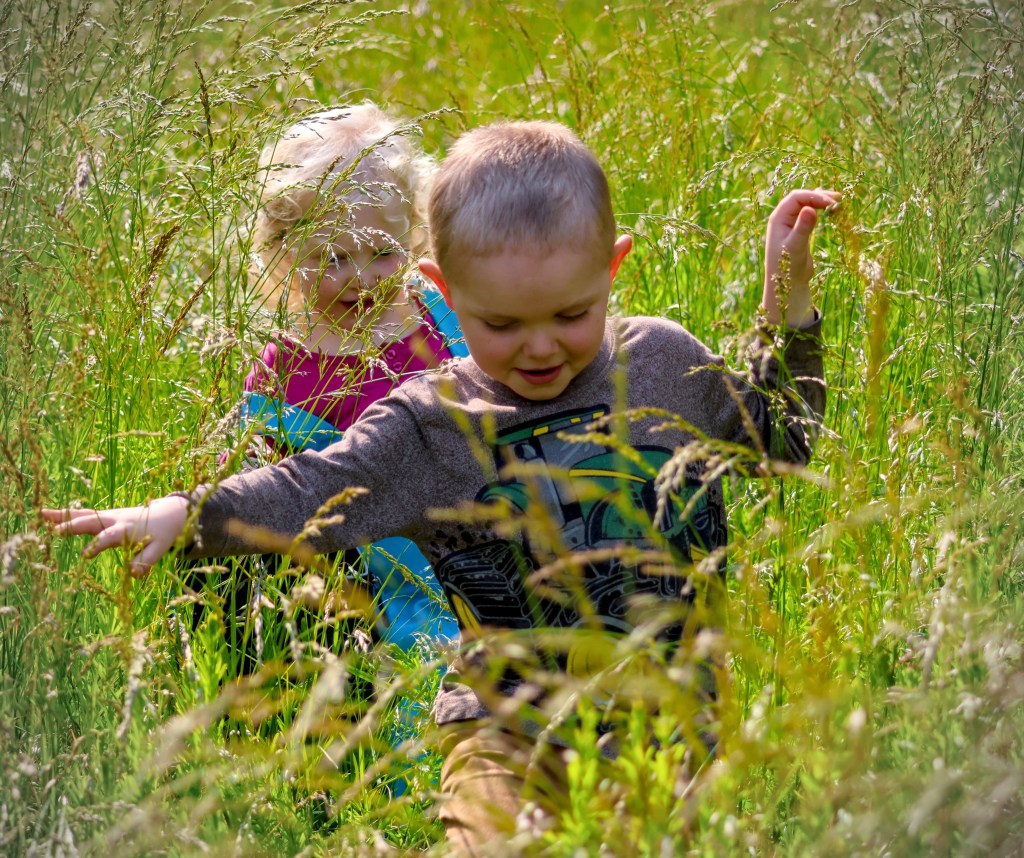
    Tim and I feel the pull of nature pretty strongly and it didn’t stop with us. Each of the kids, from Micah to little Niel, love to be outside.

    Tim has recently gotten a camera to develop his nature photography skills which means we get to enjoy the beauty of God’s nature both while we are out in it and after we come home.

    There is nothing so relaxing as sitting or walking through wildflowers and trees with no sounds but singing birds, buzzing bees, and running water. Oh, and chattering children. 🙂

    Every time I’m out foraging or exploring or picnicking, I’m reminded again about how much care God has put into this world of ours.

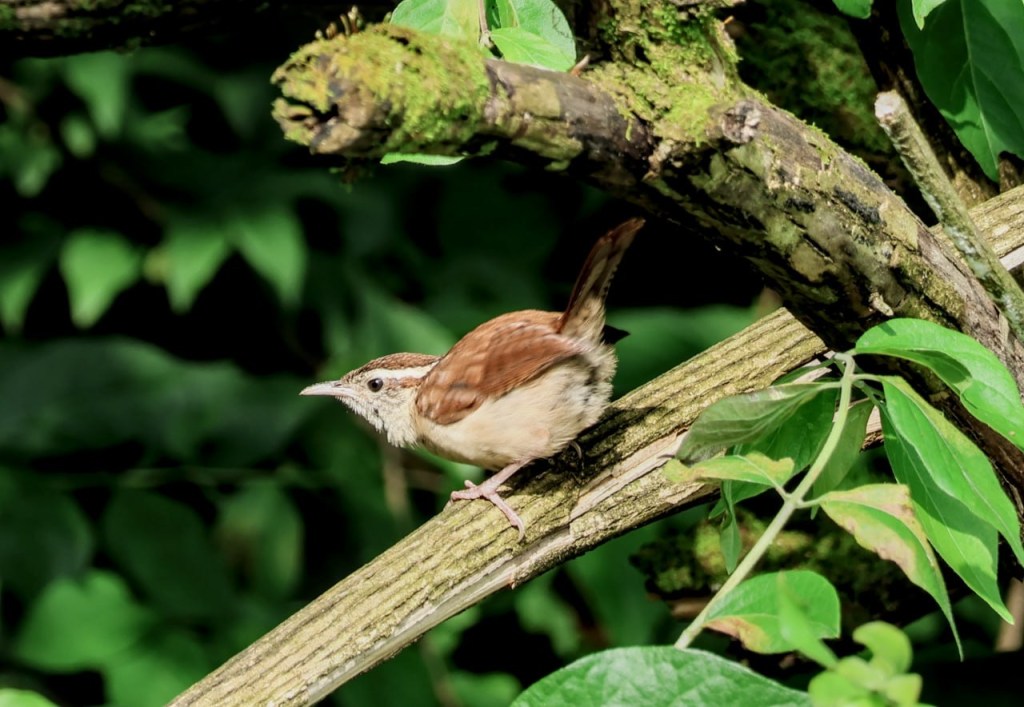
    Every bird has so much attention to detail from how its bones are formed to how its beak and feet are made for the life it leads.

    And then the flowers, like this little oxeye daisy, bloom with exquisite beauty even though they are often passed over in favor of flowers that are larger or more flashy. But God took the time to make each little part of this daisy to not only look lovely, but to be great for herbal medicine as well.

    At the end of the day, spending time with God in His beautiful world is our favorite way to relax and recenter ourselves to Him and His purpose for our lives.

    All pictures in this post were taken by Tim Kinnaman.

  • Green Peaches, Anyone?

    Hello again, friends!

    I think I’ve mentioned once or twice that we have some fruit trees on our property. Two of them are peach trees, and we recently added a third one. This year is the first time either of the two older peach trees actually produced. Everyone was thrilled to see all the little green fruit forming. Micah would come bursting back into the house after walking past one of them, exclaiming, “That peach tree is loaded!”

    Well, he was right. The trees are loaded. So much so that we weren’t sure if it was safe for the branches to carry so much weight. I did some research and found out we were right – peach trees are notorious for producing more fruit than they can carry safely.

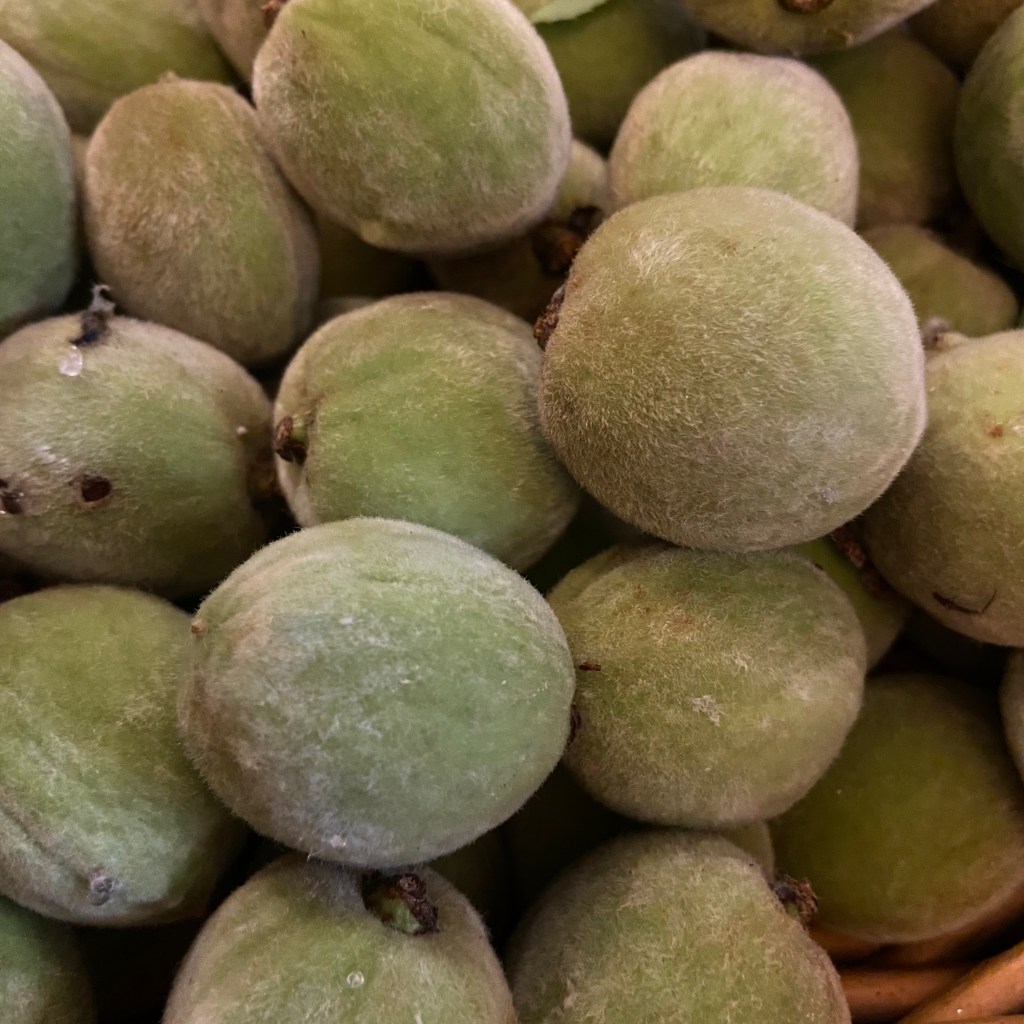
    That led to more research, where I found out that thinning peaches while they are still green and small is best. It is good not only for the health of the tree, but it also helps the peaches that are left grow bigger and taste better. “Small” means about the size of a large marble or a green walnut – before the pits are fully formed and hard. Well, that is right where our peaches are, so the other day I went and started on thinning.

    Everything was wet from recent rains, so between dodging drops of water and shaking “peach slime” (it’s called gummosis) off my hands, I wasn’t able to get a whole lot done before it was time to start supper. But it was a start!

    Now, the question is, what do I do with all these hard, sour, fuzzy, green balls? I hate to waste food if there is a good way to use it. That meant another trip to the internet. Sometimes all the info out there can get overwhelming. But in this case, it was a great help in answering questions I never would have dreamed I’d be asking a few years ago.

    From pickled green peaches to green peach pie and even fermented versions, I found more ideas than I expected. I plan to start with pickling some and then maybe try my hand at chutney. I’ve never made it, never tasted it, and barely heard of it—so it’s bound to be an adventure!

    I’ll definitely share how it all turns out for anyone curious to try the same. And if you’ve ever used green peaches in your kitchen, I’d love to hear what you made!

    Until next time!

  • A Glimmer of Dragonflies

    A Glimmer of Dragonflies

    Welcome back!

    I mentioned a few posts ago some of my ideas on decorating the house. Today, I thought I would tell you my plans for the garden adornment. After all, it wouldn’t do to neglect the garden. Once again, ceramics will play a big part in decorating the garden area. They will not all match, but each one is a piece that caught our eye and felt worth keeping.

    One piece is a large raccoon that Tim recently painted.

    Didn’t he do an excellent job? And it only took him a few hours, too. Since it is life-size, I’m sure it’ll look great tucked away somewhere out there and be sure to snag the attention of passers-by.

    I also have a fox figurine that looks pretty realistic. It’s curled up with its tail over its feet. After seeing how well the coon turned out, I told Tim he could paint the fox as well. It might go well in the orchard under a peach tree. Definitely not too close to either the rabbit hutches or duck coop, though.

    A sleeping bunny will be sure to find a cozy little spot to nestle. I’m not entirely sure where, though. Maybe in the carrots? Or the lettuce. We’ll have to see.

    Since we are starting ducks, and hopefully a few geese, we thought we should keep a pair of geese we came across while sorting ceramics. They aren’t really detailed, more country goose-style, but I think they’ll look really neat anyway if done right.

    A ceramic frog and turtle would make charming additions too, don’t you think? The frog was already nicely glazed when we got it. Actually, I have two large glazed frogs. One is tan with light green and orange spots, and I call him Puddleglum. The other is a mottled purple and cannot lay claim to any name.

    The turtle is rather large and detailed and I’m really looking forward to painting it. Alayna has painted a small snail, but we might not want it in the garden—I don’t want it to sneak off and nibble the tomatoes! If we still have any of the alligators we had listed at one point, I might keep one of them too. Thankfully, they aren’t life-size!

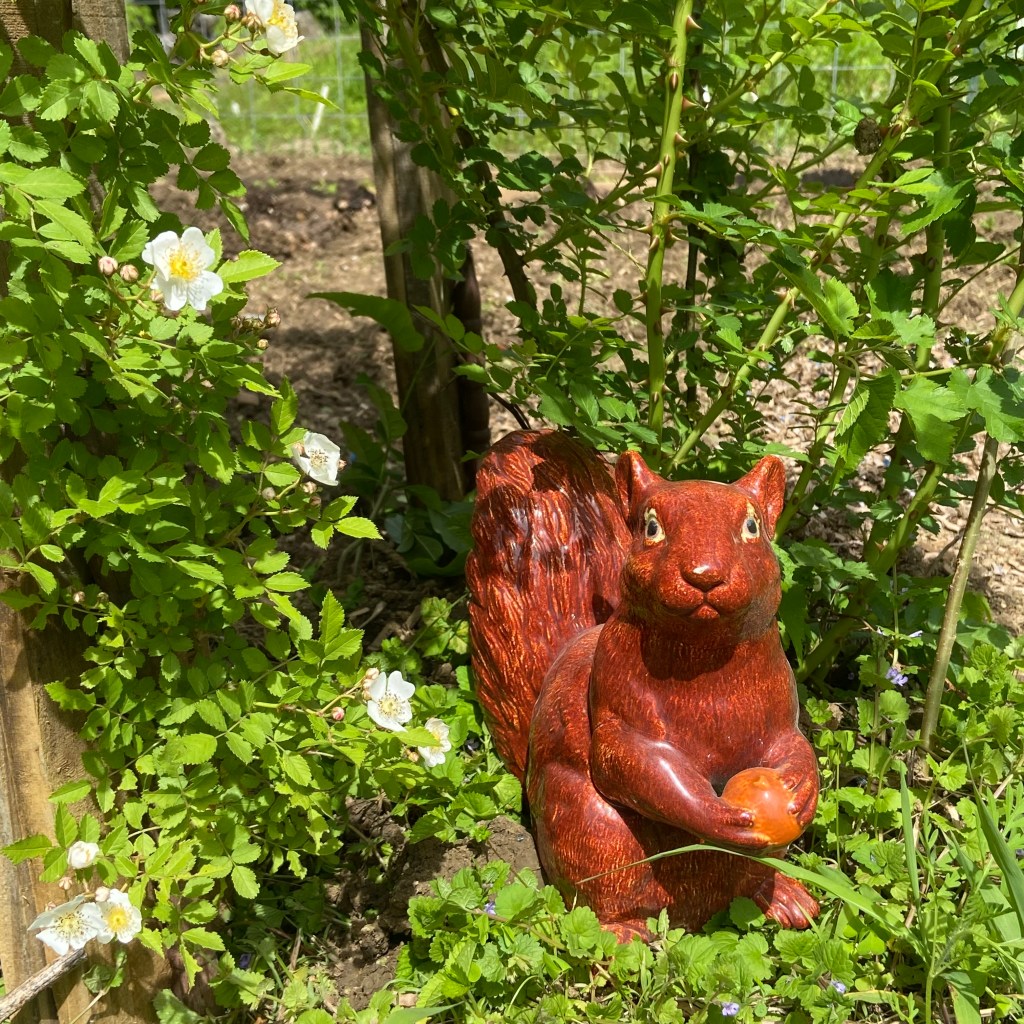
    We even found a squirrel willing to sit under our rambling rose bush and look cute. Maybe having a nut to hold makes him more docile, you think?

    Besides different animal figurines to work into our garden layout, I also plan on using some large planters, like the owl and raccoon ones I mentioned in the other post. They will have to be treated carefully to avoid breaking them, but I think it is doable. I can use them for herbs and such that have to be brought inside for the winter.

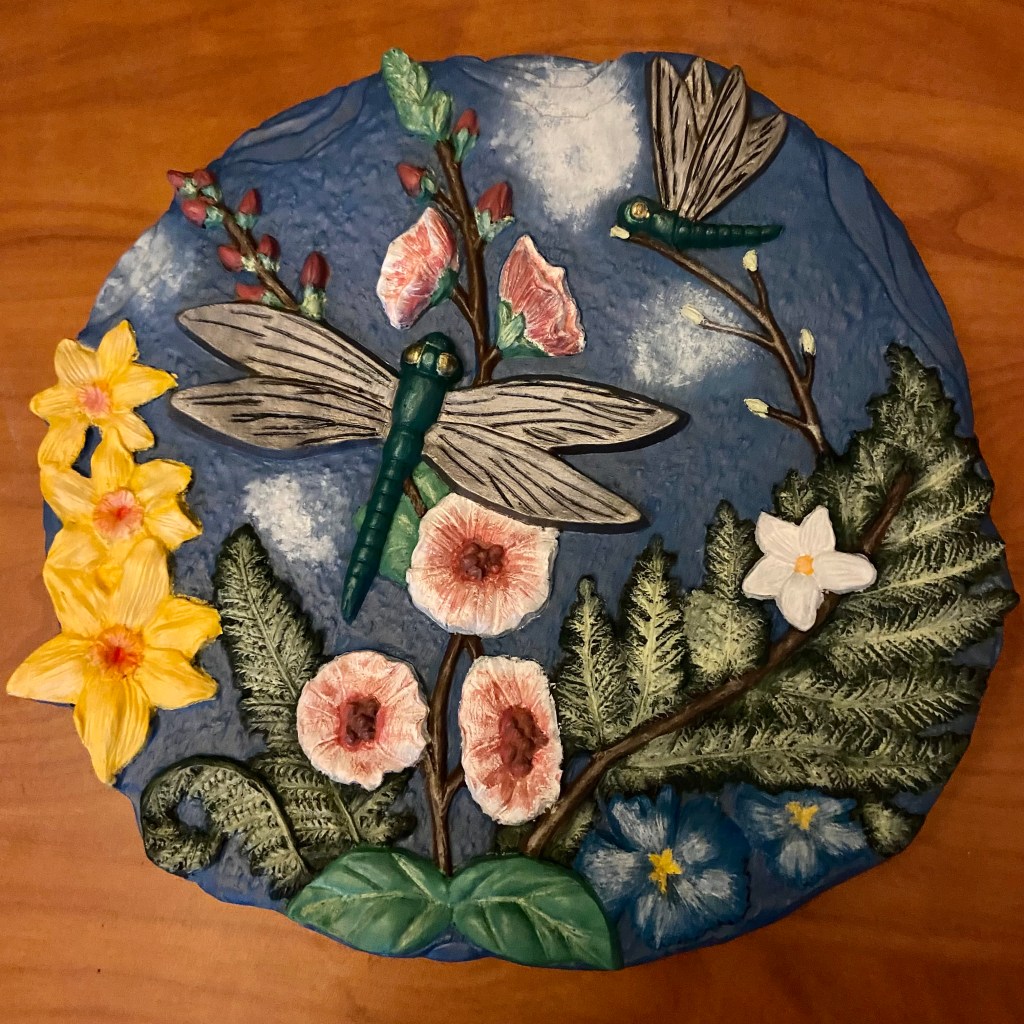
    Then I found this tile or stepping stone and just had to have it. I adore dragonflies and I am thrilled with how this turned out.

    It has four small holes in the back to allow for easier anchoring to a fence or something similar. I also have a small glimmer of individual dragonflies to place around it once they are painted.

    While it might seem silly or childish to some to take the time and effort to decorate a garden I see the garden as an extension of our house in some ways. It’s a place the whole family can spend time in and makes up an extremely vital part of our livelihood. I’m interested in having the garden be a fun place to work and not just a bunch of boring plants and pesky bugs like it was to me when I was little. So these are some of my plans to make the garden my own and give it some pep and character.

    These quirky little touches turn our garden into more than just a food source—they help make it a space where memories are made, laughs are shared, and beauty grows right alongside the veggies.

  • More Than A Handful

    More Than A Handful

    “Yes, we’ve been very blessed.”

    We were in Walmart, using one of those “family-sized” carts that proudly claims to seat three kids—as if that’s going to cut it. The baby was tucked in their car seat inside the main basket. The next youngest rode up front. Two more filled the big blue seats, and the oldest walked alongside the cart.

    A woman coming toward us looked up from her groceries and did a double take. You could almost see the numbers adding up in her head as her eyes darted from child to child—visibly counting. Then her gaze swung to me. For some reason, dads tend to vanish in moments like these, so Tim might as well have been invisible.

    Her eyes widened and she gasped, “Are all these yours? You must have your hands full!”

    I smiled and gave my usual reply: “Yes, we’ve been very blessed.”

    She went on her way and we went on ours, but the moment stayed with me. Honestly, they all do. Over the years, we’ve heard that phrase more times than I can count. Sometimes it’s said with curiosity, sometimes with judgment, sometimes with awe.

    People often don’t know what to say. Some offer a polite smile. Others let out a low whistle. Sometimes it’s a joke. Sometimes it’s a jab. And more often than not, it’s that old standby:

    “You’ve got your hands full.”

    They’re not wrong. I do. But what they usually miss is that my heart is full too—and that’s not an accident. It’s a choice. Tim and I didn’t stumble into having a large family by accident or ignorance. We walked into it hand in hand, prayerfully, one child at a time, saying yes to the life God gave us.

    Choosing a large family wasn’t about collecting kids or chasing chaos. It was about obedience. About trust. About believing that when God said children are a blessing, He meant it. We knew the world might not always understand, and we knew it wouldn’t be easy—but we believed it would be worth it.

    Before Micah, our oldest, was ever born, Tim and I felt God laying it on us to raise our children to be able to be used by Him. Early on, we realized that these children, who wake up at full volume and leave toys in their wake, aren’t really ours. They are entrusted to us to be raised as worthwhile people who are equipped, mentally, emotionally, and physically, to step up and fill the place God designed them for.

    That’s not to say it’s always picture-perfect. There are tears—mine and theirs. There’s clutter and noise and more laundry than I care to calculate. Some days I cry in the closet. Some days we eat a hodge-podge of leftovers for dinner. But even on the hard days, there’s beauty. There’s deep, meaningful, soul-stretching joy in this calling.

    I get the joy of sitting down to a meal and telling Alayna she did a good job on the bread and watching her face light up. Tim is able to compliment Micah on his hard work and willingness to tackle the tough jobs. We get to be interrupted time and again by small arms wrapping around us in hugs or little voices lisping, “I love you, you’re the best Mommy (or Daddy)”. We get the enjoyment of dishing up thirds for these bottomless pits other people think are our children and hearing the delight as they wolf it down. Tim and I have the joy of being “pestered”, no matter the job we’re doing, by children itching for a way to help.

    What people often don’t see when they count heads in the grocery aisle is the joy behind the numbers. They don’t see the sibling giggles during bedtime stories, or the way the older ones help tie shoes and fill thermoses. They don’t see the baby smiles, the spontaneous hugs, or the shared victories of a big family learning to do life together. It’s not always glamorous, and it rarely fits in a shopping cart—but in the noise and the ordinary, joy keeps showing up.

    So yes, my hands are full. But so is my heart. And I wouldn’t trade that for anything. Not for a quieter house, or cheaper grocery bills, or less laundry, or more sleep. This is the life God gave us, and we are honored to live it.

    Homestead Hilarity

    Micah’s Dilemma:
    More siblings meant we wouldn’t be able to drive his favorite vehicle—a pickup truck.

    Micah’s Solution:
    “I guess we’ll just have to get a bus, then!”

  • Fifty-Three Pounds Of Chicken

    Fifty-Three Pounds Of Chicken

    Hey there! Welcome back.

    What is your favorite way to process fifty-three pounds of frozen chicken if it suddenly landed on your counter? Probably like you, I had never thought of what I would do with that much chicken at once. But then a friend showed up with a large box of chicken pieces just hoping we would be willing to take it off their hands. How could I say no? It may have also been that saying no never even crossed my mind. I mean, this was fifty-three pounds of free chicken for me to put up. That sounded like a home canner’s dream come true. So I quickly decided that this much chicken just had to be canned, as that opened up practically endless possibilities for how it could be used later.

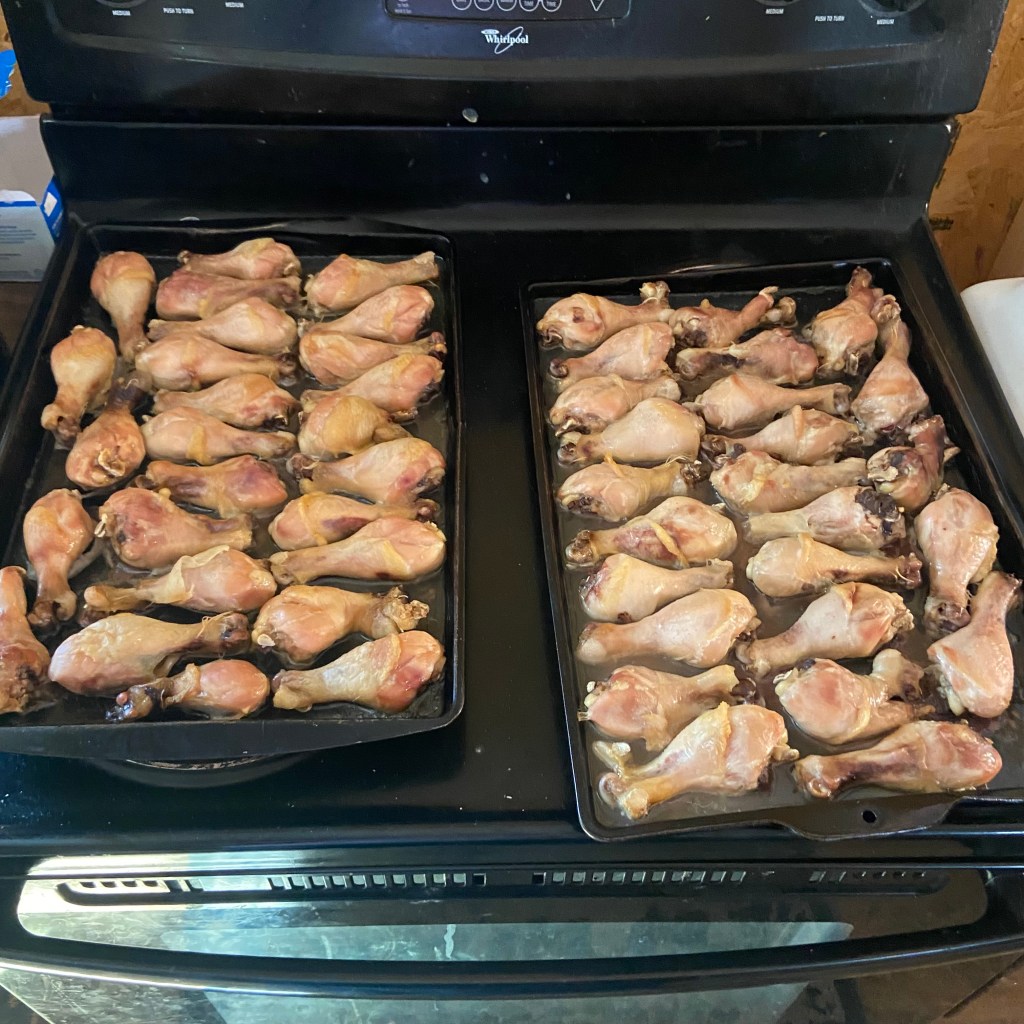
    Since the chicken was still frozen solid, I let it sit out to thaw, aiming to start processing once it was thawed enough to separate. After getting a “good” start, I saw that despite all the chicken baking and boiling and cooling I had gone through less than half the box. It was quickly becoming obvious that this was just the beginning of a full-blown chicken canning marathon.

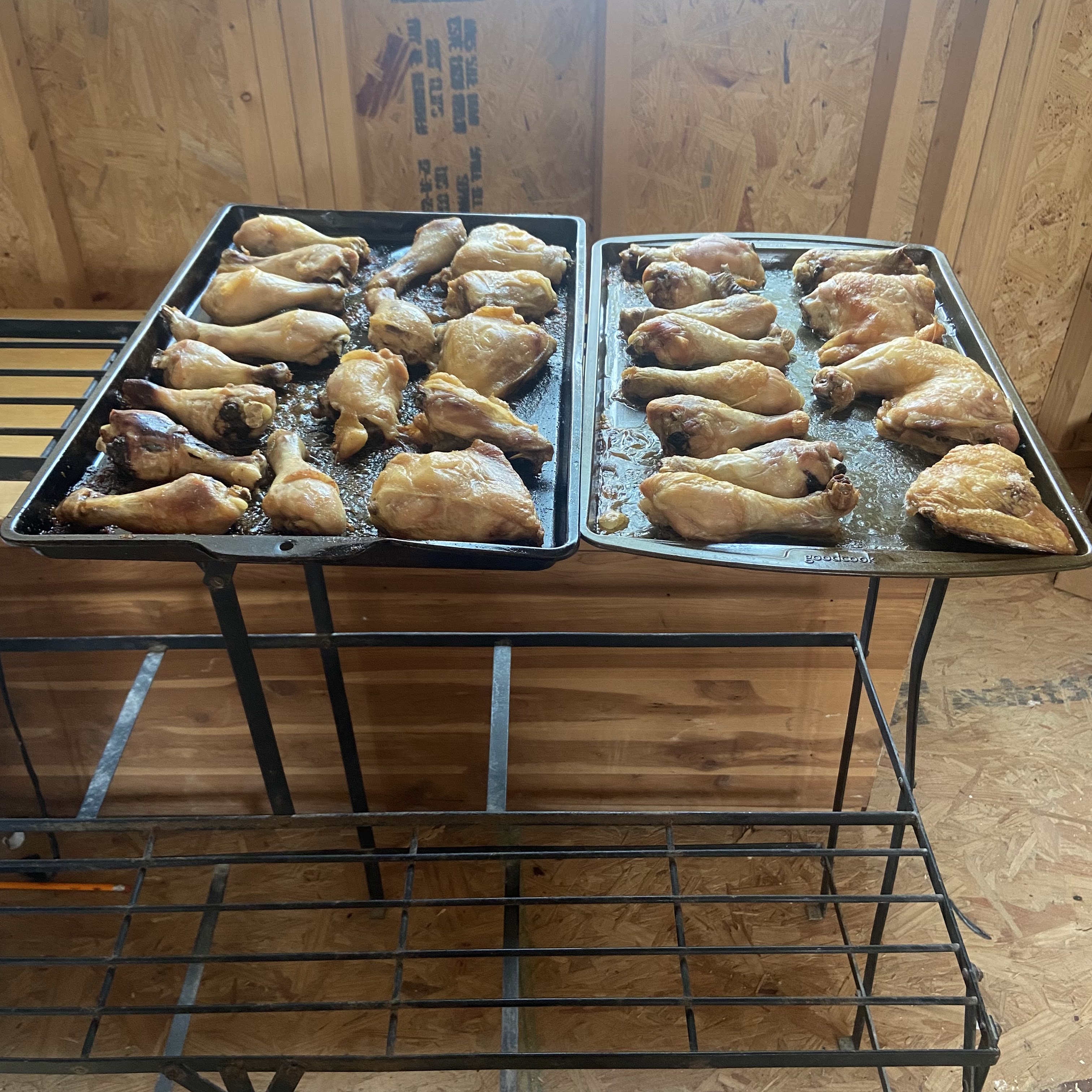
    So, more chicken went into the oven, stockpan, and even my crockpot in a seemingly endless procession until all 120+ pieces were cooked and ready to be picked off the bones. 

    That was a whole process in itself and for a while I wasn’t sure if I was going to run out of chicken first, or fingers. Micah and Alayna both wanted to help, but as they struggle to detect all the bones, I stuck it out myself.

    Once the meat was all ready, I pulled out my jars, filled them with steaming meat, topped them off with broth and a little salt, and prepared my pressure canner. Only to find that the weight was missing. That sent me into researching and digging until I found out how to water bath chicken. Since my water bath canner was also missing in action I made do with a large stock pan. Now, before anyone gets worried, I know pressure canning is the standard for meat, but since water bath canning used to be all anyone did, I decided to give it a try.

    I have to admit, waiting the entire 180 minutes while the jars canned was definitely not my favorite part of it all. Since I was using a substitute pot, it was not tall enough to put as much water in as was needed. Instead, I had another pan of water going and kept topping off the “canner” when it got a little low.

    After removing all the bones for bone meal, the scraps for dog food, and enough meat to make four meals for ten people, I was able to put up five quarts of chicken. Not a huge amount, but I was happy.

    By the time I was done, it was 11 PM and I was rather tired but satisfied. Seeing those jars lined up on the counter, knowing they’d be feeding my family in the months to come, made all the effort feel worthwhile. It’s funny how something as simple as preserving food can feel like such an accomplishment, but every time I do it, I’m reminded why I love it.

    And now, if fifty-three pounds of chicken shows up at my door again, I will know what to do with it!

  • A Family Tomato Tale

    A Family Tomato Tale

    Welcome back!

    Transplanting makes for an exciting day! Several weeks ago, we started several trays of plants. One of those trays held 80 Napoli tomato seeds we bought from MIGardener (Napoli Tomato – MIgardener).

    We chose this variety for its usefulness in several different ways. It is advertised as an excellent sauce tomato which is pretty high on our list. Tim has a smidgen of Italian in him and it likes to come out in his cooking. So pasta sauce and pizza sauce are definitely on our canning agenda for this year. But Napoli tomatoes are also supposed to be good for slicing, so that means diced tomatoes and salsa as well as just eating in salads or on hamburgers. 

    Now, we weren’t expecting anywhere close to 80 starts from that tray. But, since we have lots of canning plans for our eventual tomato harvest, we were hoping for at least 40. Half is pretty good, right?

    Well, it was finally time to transplant all our Napoli seedlings. So Alayna and I pulled out small plastic cups, a box cutter, a bag of Burpee organic seed starting mix (Burpee Eco Friendly 8 Qt Seed Starting Mix 0.06-0.03-0.03 – Burpee), and of course our tomatoes.

    Alayna had the job of cutting three little 1-inch tall triangles around the base of each cup and then stacking them in another uncut cup. These triangles were for bottom watering so I didn’t have to pour water on the top and increase the chances of fungus. I started teasing the plants out of their cells, dividing all the ones I could, and filling the cups with starter mix.

    Once we got into the rhythm it was not a hard job by any means, but it was a time-consuming one. I had to be careful not to damage the roots and Alayna had to take care not to damage her fingers! One by one the cups started to fill up and orderly rows of amazing-smelling tomato starts began taking up more and more room on the table. Tim had some free time so he jumped in to help, carefully separating the seedlings into their cups. Between him and Alayna, I had to hustle and still ended up woefully behind. 

    When everything was said and done, or every last seedling separated and filled, we had an amazing total of… Drum roll… 75 tomato plants. 75! That means between the seeds that didn’t germinate and the ones that weren’t healthy enough to save, we only lost 5. Those are some amazing results! We have never had tomatoes grow this well. I’m not sure if it was the variety or the quality of seeds or that we started them in coconut coir instead of potting soil or a combination of everything, but we are thrilled.

    Watering them all was the next challenge. I did not water them the evening we transplanted them as they came out of the tray cells rather wet. But the next morning I knew they would be needing water. My options were as follows:

    1. Lift each interior cup, pour water into the outer cup, and replace the inside one.
    2. Find enough trays with rims to hold all the inside cups while I put water in the trays and let the cups soak.
    3.  Run a few inches of water in the bathtub and put all the cups in at once.

    I chose to go with Option 3 for several reasons. Less fuss and chance of mess than Option 1 and I didn’t have to find a place to store that many trays full of water where 6 children were unlikely to bump them.

    So into the tub they went and by the time I had finished getting them in there, the 5 minutes I had been planning to let them soak was up making it time to take them all right back out. 

    So far, none of them look to be in danger of wilting from the transplanting which is wonderful news. It’s moments like these that remind me how much growth—both plant and personal—can come from just a few tiny seeds. And this is only the beginning.